Cyber Security News Aggregator
.Cyber Tzar
provide acyber security risk management
platform; including automated penetration tests and risk assesments culminating in a "cyber risk score" out of 1,000, just like a credit score.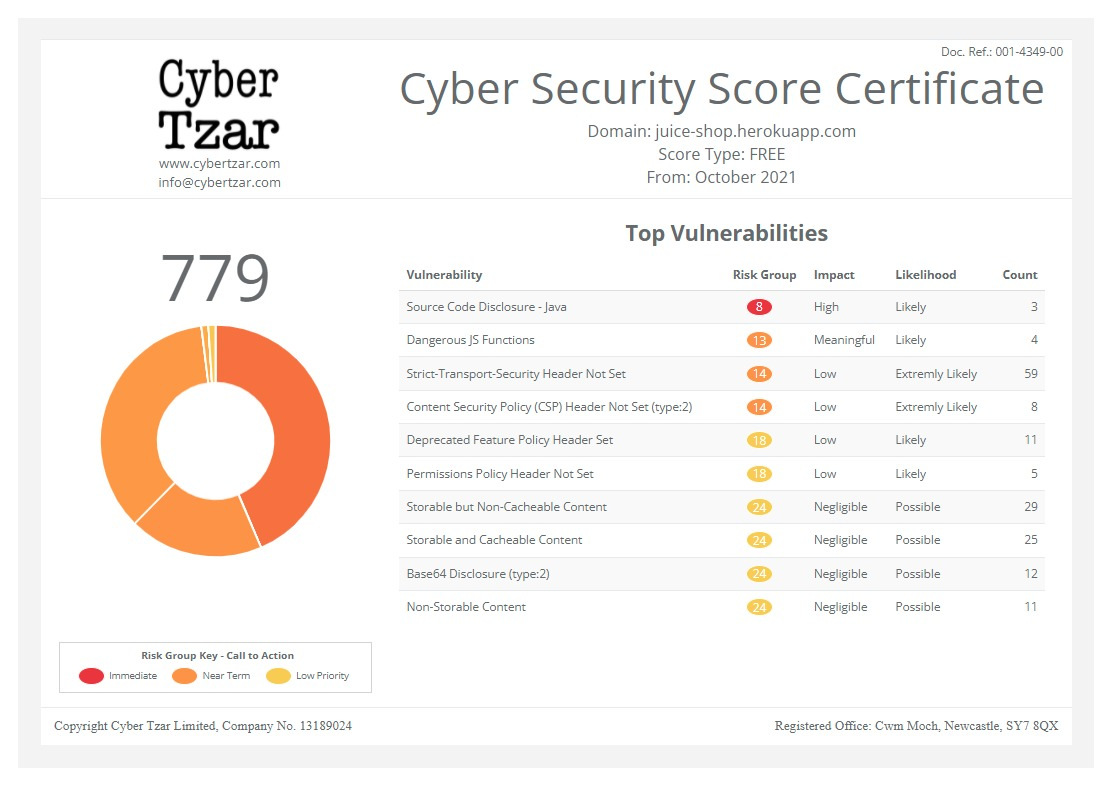
First slide label
Some representative placeholder content for the first slide.
Second slide label
Some representative placeholder content for the second slide.
Third slide label
Some representative placeholder content for the third slide.
Trump’s H-1B Crackdown Shakes Indian IT Sector
published on 2025-09-22 02:29:51 UTC by Snutz37Content:
The Impact of Trump’s H-1B Visa Policy on India’s IT Sector
The U.S. presidential election has triggered a significant shift in the landscape for India’s $283 billion information technology sector. With the introduction of a $100,000 fee for new H-1B visas, the industry is facing a critical juncture that could reshape its long-standing strategies. This change comes at a time when the sector earns about 57% of its revenue from the U.S. market, making it highly dependent on U.S. work visa programs.
India has been the largest beneficiary of H-1B visas, accounting for 71% of approved beneficiaries last year, according to U.S. government data. This has allowed Indian IT firms to outsource software and business services, a practice that has sparked controversy among American workers who have lost jobs to cheaper labor from India. The new policy will likely force IT companies with major clients like Apple, JPMorgan Chase, Walmart, Microsoft, Meta, and Alphabet’s Google to reconsider their approach to onshore rotations.
Challenges Ahead for the IT Sector
Experts suggest that this move by the administration will lead to a pause in onshore rotations, an acceleration of offshore delivery, and an increase in hiring U.S. citizens and green card holders. The “American Dream” for aspiring workers may become more challenging, as many expect firms to restrict cross-border travel and focus more on work done in countries like India, Mexico, and the Philippines.
Industry leaders such as Ganesh Natarajan, former CEO of Zensar Technologies, highlight that the impact will be felt across the board. However, some major IT firms like Tata Consultancy Services, Infosys, HCLTech, Wipro, and Tech Mahindra have not yet commented on the issue. Industry body Nasscom warns that the move could have ripple effects on America’s innovation ecosystem and disrupt business continuity for onshore projects.
Repricing and Project Delays
Most industry observers anticipate that Trump’s decision will constrain client-facing roles, affecting IT deal conversions and extending the time needed to scale up tech projects. Clients are expected to demand repricing or delay start dates until there is clarity on legal challenges. Some projects might be re-scoped to reduce onshore staffing, while others could shift delivery offshore or near-shore from the outset.
Immigration lawyers have noted that the new visa fee is steep and that companies will become more selective in deciding which candidates to sponsor. Vic Goel, managing partner at U.S. law firm Goel & Anderson, states that the H-1B program will likely be reserved for only the most business-critical roles, significantly reducing access for many skilled foreign nationals.
Legal Challenges and Uncertainty
Before the White House clarified that the order applied only to new applicants, companies advised employees on H-1B visas to stay put or return to the U.S. before Sunday. This caused chaos for many workers from India and China who had to abandon travel plans. Immigration lawyers expect legal challenges to follow soon, with several lawsuits anticipated this week.
Shifting Focus to Global Capability Centers
Despite these challenges, industry watchers predict that Trump’s move will accelerate the growth of U.S. firms’ global capability centers (GCCs). These centers have evolved from low-cost back offices to high-value innovation hubs. Time zone proximity is expected to boost GCCs in Canada, Mexico, and Latin America, where talent is stable and cost advantages remain.
India, currently home to more than half of the world’s GCCs, is projected to host over 2,200 companies by 2030, with a market size nearing $100 billion and generating up to 2.8 million jobs. Experts like Ray Wang foresee a new world order in services economics, with more GCCs in India, increased local hiring in the U.S., and greater pressure to deliver automation and AI.
Conclusion
The H-1B visa policy changes mark a pivotal moment for India’s IT sector. While the immediate challenges are significant, the long-term implications could lead to a more diversified and resilient industry. As companies adapt to these changes, the focus will shift towards innovation, local hiring, and strategic investments in global capability centers. The future of the IT sector will depend on how effectively it navigates these transformations.
The post Trump’s H-1B Crackdown Shakes Indian IT Sector appeared first on fondtimes.
https://fondtimes.com/2025/09/22/trumps-h-1b-crackdown-shakes-indian-it-sector/
Published: 2025 09 22 02:29:51
Received: 2025 09 22 05:38:49
Feed: CyberPunk
Source: CyberPunk
Category: Cyber Security
Topic: Cyber Security
Views: 13
