Welcome to our
Cyber Security News Aggregator
.Cyber Tzar
provide acyber security risk management
platform; including automated penetration tests and risk assesments culminating in a "cyber risk score" out of 1,000, just like a credit score.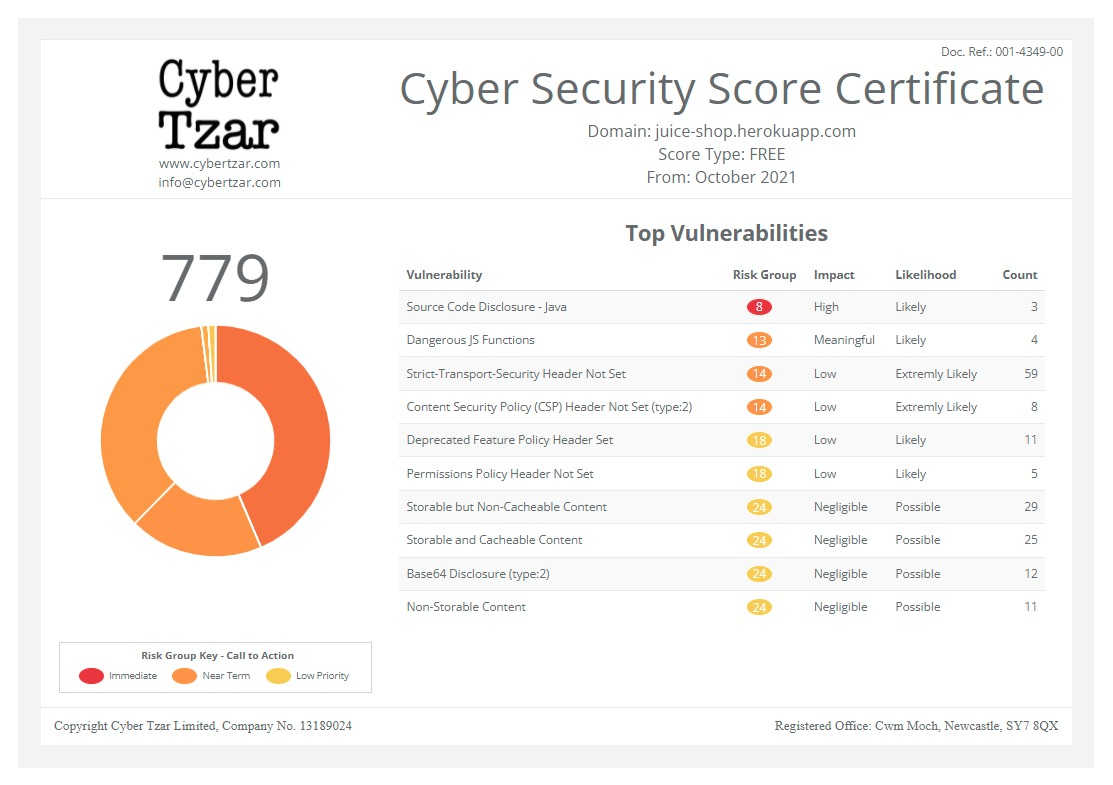
First slide label
Some representative placeholder content for the first slide.
Second slide label
Some representative placeholder content for the second slide.
Third slide label
Some representative placeholder content for the third slide.
2026 64-Bits Malware Trend, (Mon, Feb 16th)
published on 2026-02-16 07:46:36 UTC byContent:
In 2022 (time flies!), I wrote a diary about the 32-bits VS. 64-bits malware landscape[1]. It demonstrated that, despite the growing number of 64-bits computers, the "old-architecture" remained the standard. In the SANS malware reversing training (FOR610[2]), we quickly cover the main differences between the two architectures. One of the conclusions is that 32-bits code is still popular because it acts like a comme denominator and allows threat actors to target more Windows computers. Yes, Microsoft Windows can smoothly execute 32-bits code on 64-bits computers. It is still the case in 2026? Did the situation evolved?
https://isc.sans.edu/diary/rss/32718
Published: 2026 02 16 07:46:36
Received: 2026 02 20 11:53:14
Feed: SANS Internet Storm Center, InfoCON: green
Source: SANS Internet Storm Center, InfoCON: green
Category: Alerts
Topic: Vulnerabilities
Views: 3
