Cyber Security News Aggregator
.Cyber Tzar
provide acyber security risk management
platform; including automated penetration tests and risk assesments culminating in a "cyber risk score" out of 1,000, just like a credit score.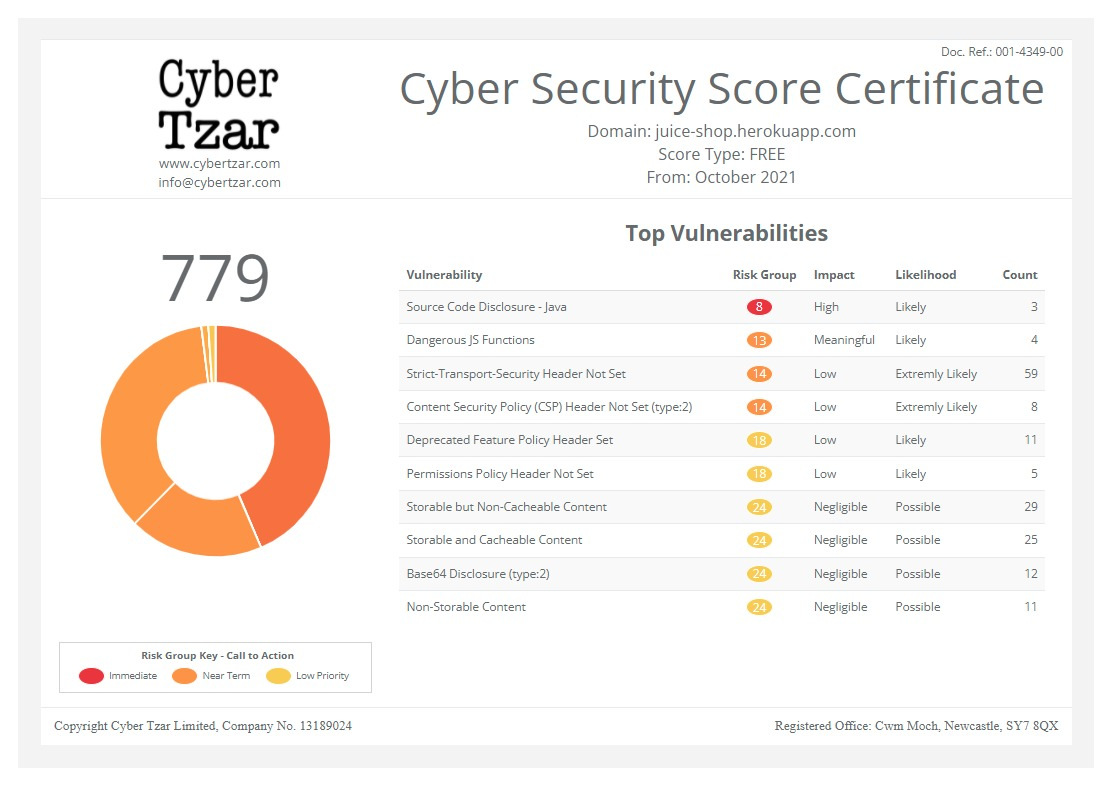
First slide label
Some representative placeholder content for the first slide.
Second slide label
Some representative placeholder content for the second slide.
Third slide label
Some representative placeholder content for the third slide.
The Gaps That Created the New Wave of SIEM and AI SOC Vendors
published on 2026-02-03 15:59:02 UTC by Raffael MartyContent:

Update (2026-02): I released the SIEM Maturity Framework Workbook (v1.0) that turns this post into a practical scoring tool.
I have been talking to a few AI SOC and new SIEM market entrants over the past few weeks. I have voiced some opinions in previous posts but have now started to capture a list of features that I believe represent the openings existing SIEM players have created in the market for these new vendors to emerge.
Before I outline what I think those features are, let me be clear: this is my list. I am aware that existing SIEM vendors will claim that they already do many of these things. All I will say is this: market churn and capital flow suggest that these capabilities are either not as mature or not as integrated as claimed.
And to the AI SOC companies and investors: be careful about the short-term problems your investments are solving. Yes, there is real traction with MSSPs that are overloaded with false positives. And yes, many will gladly pay to reduce alert workload by 80%. But in many cases, these problems are being addressed superficially. Make sure you audit the underlying approaches and verify that the foundational infrastructure is sound. Solving this problem on top of an existing detection infrastructure doesn’t solve the problem at the core, which is the detections themselves. We need to fix those with some of the suggestions below to not needing a top-layer, alert reducer.
Without further ado, here are the items I am tracking. I welcome other opinions and additions to the list (no guarantee I will include them). Over the coming weeks, I will also try to rate some of the players across these categories to enable comparison. I could use help with that. Ping me.
A. DATA & CONTROL PLANE ARCHITECTURE
- Federation – The ability to query and reason over data where it lives, without forced centralization.
(Another post following here at some point about the limitations of federation). - Data Pipeline Optimization – Dynamic ingestion pipelines that enrich, route, sample, and filter data based on use case, risk, and downstream value. Not static “send everything to the lake.”
- Data Awareness – Understanding what data exists, what is missing, and what has silently degraded. The system must continuously reason about its own observability.
- Performance as a First-Class Constraint – Fast joins and low-latency queries across all relevant data. Real-time rule execution at scale. This is not about basic scalability, but about maintaining predictable performance as rule count and complexity increase, without simply throwing more compute at the problem.
- Modern AI Integration – The ability to integrate with emerging architectural patterns and frameworks, including MCP servers, vector stores, and related systems.
B. DETECTION & LEARNING SYSTEMS
- Hypothesis-Driven Hunting – Hunting should start with explicit hypotheses, not ad-hoc queries. These hypotheses should evolve, fork, and self-update based on outcomes. Agents swarms anyone?
- Automated Detection Tuning (Closed Loop) – Detections must evaluate their precision and recall over time. False positives and false negatives are signals. Humans stay in the loop, but are not the tuning engine. This also helps separate the detection engineering from the tuning that should be done by analysts.
- Environment-Adaptive Detections – Rules and models must adapt automatically to the specific environment, business processes, and user behavior and analyst feedback. Generic detections are table stakes.
- Detection Lineage and Memory – The system must remember why a detection exists, how it has changed, and what outcomes it has historically produced.
C. ENTITY-CENTRIC RISK & CONTEXT
- Asset Awareness – Effective protection and detection start with understanding what is being protected. Entity visibility is foundational: who owns this entity, what does it do, and which business processes does it support?
- Real-Time Entity Risk Scoring – Each entity has a continuously updated risk score driven by behavior, exposure, and contextual signals.
- Entity Risk Context – Risk is not a number. It is a set of properties that help explain the risk and provide context for decision making.
- Business Context Integration – Entities must be tied to business processes, ownership, and criticality, and this context must inform alert generation and prioritization. Some people have started calling this the Context Graph.
D. OPERATIONAL REALITY (SOC, MSSP, ENFORCEMENT)
- Simple Query Interface: Support for both natural language and structured query languages (such as KQL). Analysts need both.
- Alert Triage Automation – Using ‘advanced’ context to tune detections. Ideally we have business context available to continuously improve our detections.
- Blindspot Detection – The system must actively identify where detections cannot exist due to missing or degraded logs or logging configurations. This includes making sure that log sources are actually staying up and keep reporting what they have to.
- Real-Time Readiness for Enforcement – We need our systems to become preventative. Therefore, its risk model must operate in near real time. Attackers are acting too fast.
A Few Additional Comments for Context
This is not meant to be a SIEM RFP. I am intentionally not listing table-stakes capabilities such as basic scalability, data source support, or baseline detection depth.
This list is less about features than about where intelligence and control actually live in the system. I am also not being prescriptive on how these features are built. Many of them can benefit from AI / LLM / ML approaches and, in fact, should be using them.
Look at the list, then look at your AI SOC platform of choice. How much of the above does it truly cover?
If you are evaluating an AI SOC platform and most of its value proposition lives above alerts rather than below them, you should be skeptical.
Update (2026-02): I released the SIEM Maturity Framework Workbook (v1.0) that turns this post into a practical scoring tool.
The post The Gaps That Created the New Wave of SIEM and AI SOC Vendors first appeared on Future of Tech and Security: Strategy & Innovation with Raffy.
https://raffy.ch/blog/2026/02/03/the-gaps-that-created-the-new-wave-of-siem-and-ai-soc-vendors/
Published: 2026 02 03 15:59:02
Received: 2026 04 12 23:54:19
Feed: Security Intelligence and Big Data
Source: Security Intelligence and Big Data
Category: Cyber Security
Topic: Cyber Security
Views: 0
