Cyber Security News Aggregator
.Cyber Tzar
provide acyber security risk management
platform; including automated penetration tests and risk assesments culminating in a "cyber risk score" out of 1,000, just like a credit score.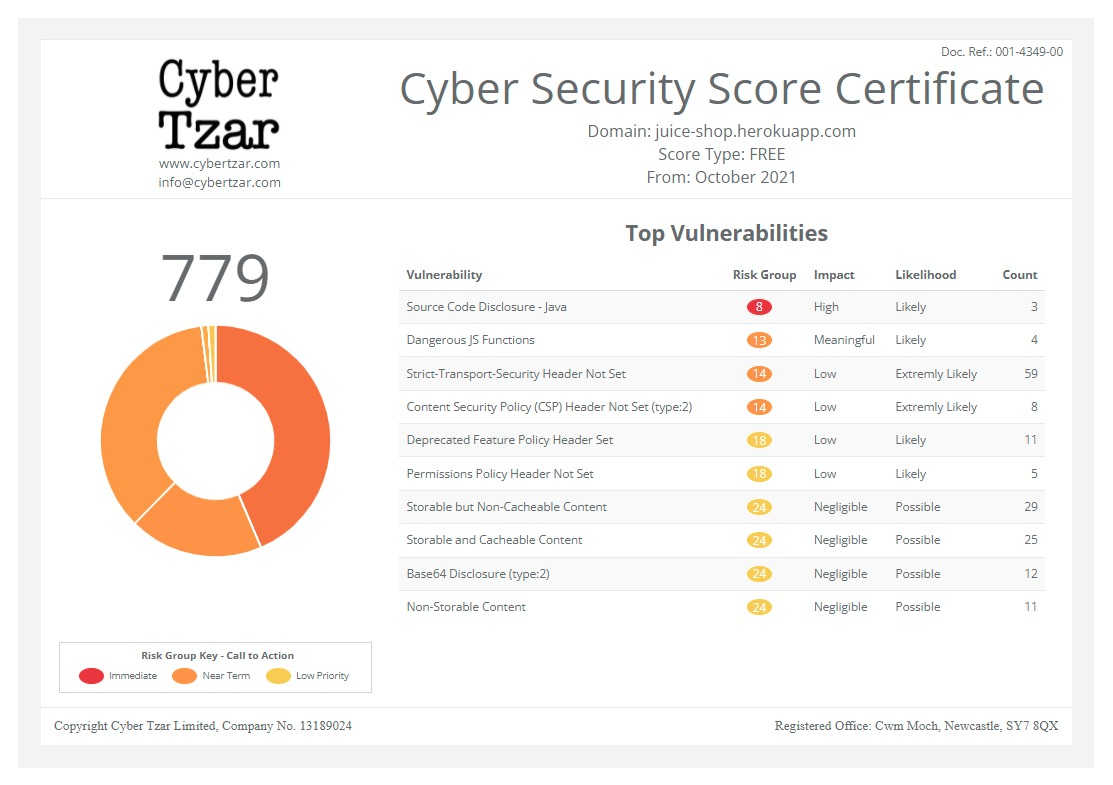
First slide label
Some representative placeholder content for the first slide.
Second slide label
Some representative placeholder content for the second slide.
Third slide label
Some representative placeholder content for the third slide.
OAuth 2.0 BCP §4.14 reuse detection in practice — race vs theft disambiguation
published on 2026-04-23 15:57:57 UTC by /u/No_Ask_468Content:
Standard advice for refresh tokens: rotate on every use, store hashed, set a short expiry. Done, right?
Not quite.
Rotation alone does nothing against token theft. If malware or XSS lifts a refresh token from a legit client, the attacker and the client race to rotate it next. Whoever loses the race gets a "token revoked" error — and the winner keeps the session.
From the server’s point of view, it just sees two valid requests seconds apart. No alarm, no signal, nothing.
The missing piece is what OAuth 2.0 Security BCP §4.14 calls refresh token reuse detection: if a token that was already rotated is presented again, treat it as evidence of compromise and invalidate the entire session.
The core idea
Every token belongs to a family (FamilyId), shared across all rotations of a single login.
If a rotated token shows up again (outside a small grace window), you revoke the entire family:
- the attacker is locked out
- the legit user is forced to re-authenticate
- the session is no longer silently compromised
if (stored.ReplacedByTokenHash is not null && stored.RevokedAtUtc.HasValue) { var withinGrace = stored.RevokedAtUtc.Value.AddSeconds(graceSeconds) > DateTime.UtcNow; if (withinGrace) return Fail("token_recently_rotated"); // benign race (SPA tabs, retries) await RevokeFamilyAsync(stored.FamilyId, ip, reason: "reuse_detected"); return Fail("token_reuse_detected"); } Client-side it’s just one extra branch:
if (error.code === "token_reuse_detected") { // "You've been signed out for security reasons. Please log in again." router.push("/login?reason=compromised"); } You can also hook into it for observability (alerts, SIEM, etc.):
services.AddSingleton<IAuthEventSink, SlackAlertSink>(); The tricky parts
- Race vs theft look identical. Two requests with the same token arrive. One is legit, one might not be. Only timing differs. Grace window too small → false positives on flaky networks. Too large → real attack window. ~30 seconds worked well in practice.
- Revoking the whole chain. On reuse you must invalidate all still-active tokens from that session. A simple
FamilyId+ index makes this a single bulk update. - Concurrency is common. Multi-tab SPAs, retries, mobile reconnects — without a grace window, I was logging myself out constantly during tests.
I ended up adding this to a small self-hosted auth library I’ve been working on (https://www.reddit.com/r/dotnet/comments/1shpady/selfhosted\_auth\_lib\_for\_net/)
[link] [comments]
https://www.reddit.com/r/netsec/comments/1stmva0/oauth_20_bcp_414_reuse_detection_in_practice_race/
Published: 2026 04 23 15:57:57
Received: 2026 04 23 16:20:13
Feed: /r/netsec - Information Security News and Discussion
Source: /r/netsec - Information Security News and Discussion
Category: Cyber Security
Topic: Cyber Security
Views: 2
