Cyber Security News Aggregator
.Cyber Tzar
provide acyber security risk management
platform; including automated penetration tests and risk assesments culminating in a "cyber risk score" out of 1,000, just like a credit score.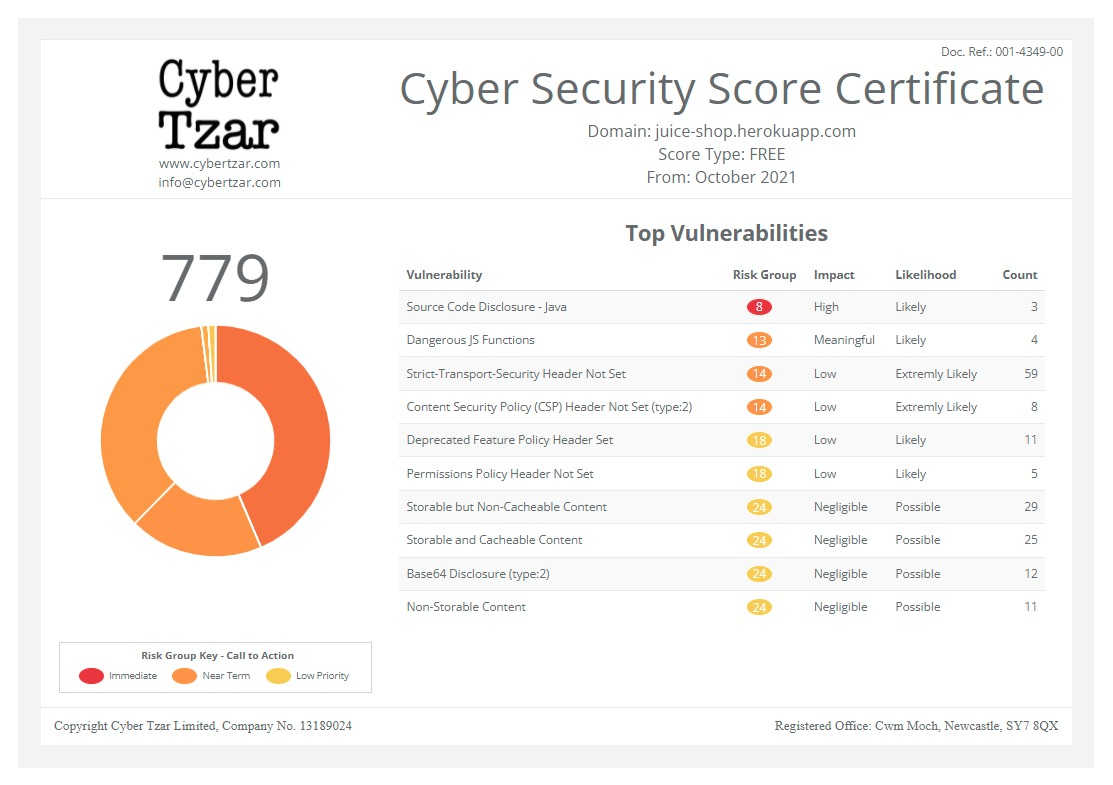
First slide label
Some representative placeholder content for the first slide.
Second slide label
Some representative placeholder content for the second slide.
Third slide label
Some representative placeholder content for the third slide.
An AI security auditor that red-teams PRs to find exploits, not just patterns (open-source + Ollama support)
published on 2026-05-07 12:09:53 UTC by /u/itzdeeniContent:
Hey everyone,
I’ve been working on an experiment in AI-driven application security called SentinAI. I’m a backend engineer in fintech, and I spent part of my recent leave trying to explore a simple question:
Most SAST tools are basically metal detectors:
they’re great at catching obvious patterns like unsafe functions or missing headers.
But they struggle with the stuff that actually matters in real systems:
- IDORs
- authorization drift
- multi-tenant isolation issues
- broken middleware assumptions
- cross-file logic flaws
Attackers don’t think in patterns.
They think in systems.
So I built something experimental to explore that gap.
🧠 The Architecture (3-Agent Loop)
Instead of a single LLM prompt (which tends to hallucinate easily), SentinAI uses a structured multi-agent flow:
1. The Architect
Maps the system:
- routes
- auth boundaries
- data flows
- trust assumptions
2. The Adversary 🥷
Tries to break it:
- generates exploit paths
- builds step-by-step attack chains
- simulates real-world abuse scenarios
3. The Guardian 🛡️
Validates everything:
- checks exploits against actual code context
- verifies whether attacks are truly possible
- filters hallucinated or low-confidence outputs
Anything below a confidence threshold (~40%) is dropped.
The goal is not to “find everything.”
It’s to only surface things that are actually exploitable.
💡 What surprised me
A few things stood out while building this:
- Most real vulnerabilities only appear at interaction points between files, not within a single file
- LLMs are surprisingly good at generating attack paths, but unreliable without a validation layer
- The hardest problem wasn’t detection — it was noise control
- Without a “Guardian” layer, the system becomes mostly hallucinated security reports very quickly
🔒 Privacy / Local-first design
Coming from fintech, sending proprietary code to external APIs is not acceptable.
So SentinAI is built to run:
- fully local via Ollama
- or inside a private VPC
- with no code leaving the environment
🌐 Web3 expansion (experimental)
I expanded it beyond Web2 into smart contract security:
- Solana: missing signer checks, PDA misuse
- EVM: reentrancy, tx.origin issues
- Move: resource lifecycle bugs
Total coverage: ~45 vulnerability patterns.
🚧 Open questions (honest part)
I’m still actively figuring out:
- how to reduce hallucinated exploit paths at scale
- whether multi-agent reasoning actually holds up on large, messy codebases
- where the boundary is between “useful security reasoning” and “LLM storytelling”
- whether this can realistically outperform hybrid static analysis + human review
One thing I’ve already noticed:
That’s still an open problem.
🧪 Why I’m sharing this
This started as a “leave experiment” and somehow got ~200+ organic npm installs without any promotion.
I cleaned it up and open-sourced it mainly to:
- get feedback from people deeper in security engineering
- understand where this approach fails in real-world systems
- see if “AI attacker reasoning” is actually useful in practice
🔗 If you want to poke at it
Curious to hear honest thoughts from people here:
- Where would this completely break in real codebases?
- Is multi-agent security reasoning actually useful, or just a fancy abstraction over static + LLM prompts?
- Has anyone tried something similar in production security pipelines?
[link] [comments]
https://www.reddit.com/r/netsec/comments/1t68ndo/an_ai_security_auditor_that_redteams_prs_to_find/
Published: 2026 05 07 12:09:53
Received: 2026 05 07 12:18:41
Feed: /r/netsec - Information Security News and Discussion
Source: /r/netsec - Information Security News and Discussion
Category: Cyber Security
Topic: Cyber Security
Views: 5
