Cyber Security News Aggregator
.Cyber Tzar
provide acyber security risk management
platform; including automated penetration tests and risk assesments culminating in a "cyber risk score" out of 1,000, just like a credit score.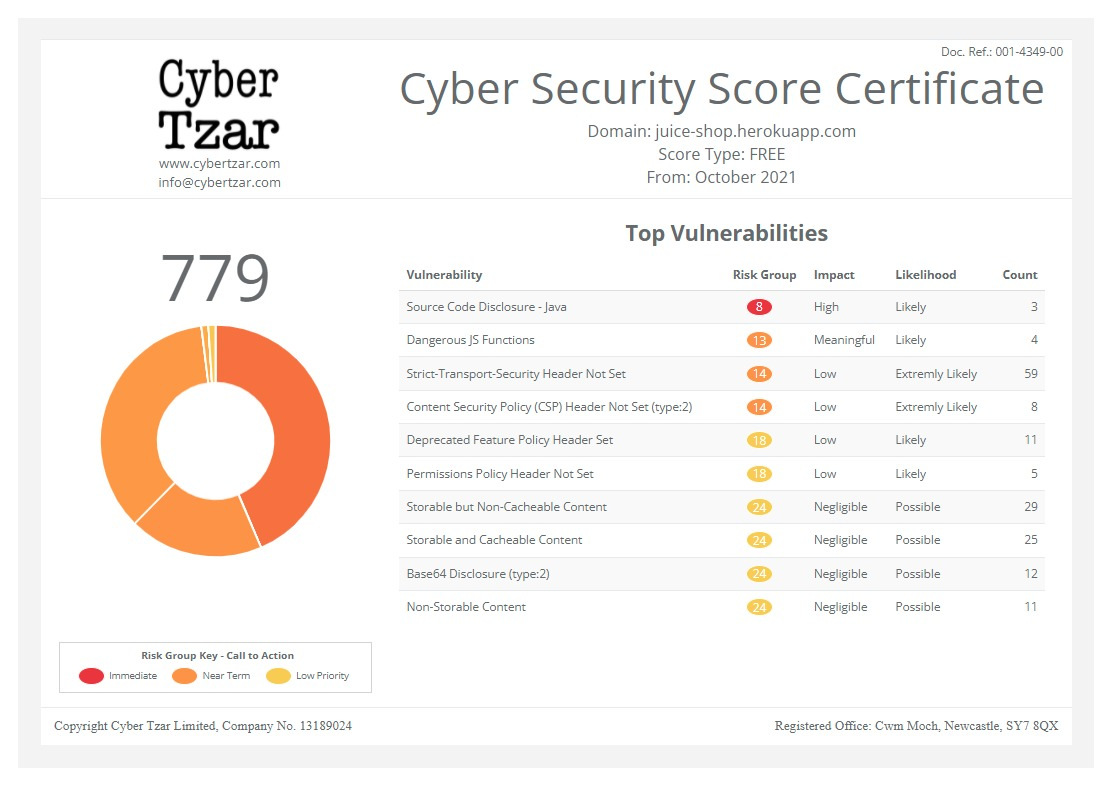
First slide label
Some representative placeholder content for the first slide.
Second slide label
Some representative placeholder content for the second slide.
Third slide label
Some representative placeholder content for the third slide.
Why regional matters in a global industry
published on 2026-06-08 07:23:25 UTC by Mark FletcherContent:
Richard Geoffrey Dover, Global A&E Programme Manager at Advancis, highlights the importance of local understanding within global programmes
The security industry is often described in terms of technology, platforms and integration. It is shaped just as much by people, environments and expectations.
Across consultants, integrators and end users, there is a shared objective, to protect people, assets and operations. But how that is delivered varies, sometimes significantly, depending on where you are in the world.
Regional understanding still matters, even in a global industry, and is often overlooked.
Technology does not operate in isolation. It sits within a framework of regulation, culture and operational practice. While platforms may be deployed globally, their application is always shaped locally.
Across Europe, markets such as the UK, Germany, Austria and the Netherlands are well established, with mature consultant ecosystems and clearly defined approaches to specification and compliance.
Other regions, including the Nordics and parts of Southern and Eastern Europe, bring their own dynamics but are still shaped by strong consultant influence and regional standards.
France and Spain sit firmly within this landscape, with established consultant communities and for Advancis the focus is on strengthening our position within those frameworks.
In Asia, markets such as Singapore, Thailand, Indonesia and Vietnam continue to see strong growth and investment.
Integration
From an Advancis perspective, these regions are becoming more prominent, with demand building for integration strategies that support scale, consistency and long-term development.
The Middle East presents another distinct environment, particularly across Saudi Arabia and the wider Gulf region.
Projects here are often delivered at significant scale, bringing together multiple systems, stakeholders and operational requirements.
The complexity and ambition demand a different level of coordination and integration, with a strong emphasis on unified, multi-faceted solutions from the outset.
The United States offers a different viewpoint. It is a large and established market with a long-standing specification culture and one where Advancis is now engaging more closely with consultants at earlier stages of project design.
The technology may be global, but its application is always regional
This is not theoretical. It shows up in how projects are approached, specified and ultimately how they succeed or don’t.
We regularly see the same technology applied in different regions with entirely different operational expectations, from compliance-driven environments to those focused on scalability and growth.
Engaging at a regional level provides a clearer understanding of priorities, expectations and constraints.
Without that, conversations remain surface level and solutions risk missing the mark.
Events such as the SJUK Leaders in Security Conference play an important role in this. They bring together professionals shaping the industry at a regional level and create space for practical discussion and shared experience.
For Advancis, supporting this event in Manchester is not simply about being present. It is about listening, understanding and contributing to a market where consultant engagement, compliance and clearly defined outcomes are expected.
Over the past 12 months, the Advancis A&E Programme has developed in response to this. What started as a focused local initiative is evolving into a global function, providing structured support at the design and specification stage.
That support is not uniform, and it shouldn’t be. Applying the same approach everywhere is one of the quickest ways to lose relevance.
The objective remains consistent, to support better design decisions. The approach is deliberately flexible, allowing for regional interpretation within a clear framework.
A central part of this evolution has been the shift away from feature-led conversations towards outcome-based design. Modern security environments are interconnected. Incidents do not sit within a single system, and effective response depends on how systems work together. That is now the reality of most projects.
This is particularly evident across complex environments such as data centres, critical national infrastructure and transport, where multiple systems, stakeholders and operational requirements must be brought together in a controlled and coordinated way.
As data centres increasingly form part of critical national infrastructure, regulatory oversight and auditability are not optional, they are fundamental to how systems are designed and operated.
Platforms such as WinGuard and AIM provide the capability to unify systems and processes, from real-time operational control through to identity and access management, ensuring that actions are guided, consistent and fully traceable.
For consultants, this changes the conversation. The focus is no longer on what a system does, but on what it delivers. What outcome is required? How is that outcome achieved? And how is it demonstrated?
Compliance now plays a central role. Projects are expected not only to function effectively, but also to demonstrate accountability.
Auditability, traceability and alignment with regulatory or internal standards are fundamental requirements.
Outcome-based design therefore goes beyond operational response. It ensures that systems not only perform but can clearly demonstrate how and why they perform.
Security today is measured not just by response, but by the ability to evidence that response
For any global programme, the challenge is to maintain consistency while allowing for regional difference.
A rigid approach risks missing the nuances that define successful delivery, while a fragmented approach limits scalability and shared learning.
The A&E Programme sits between these positions. It provides a consistent framework, while allowing for regional adaptation and supporting consultants without constraining how solutions are applied.
Ultimately, security is not defined by technology alone. It is defined by how effectively organisations can respond to risk, make decisions and operate with confidence.
That requirement is global. The way it is achieved is regional. Not in applying a global message unchanged, but in ensuring it works where it matters most, on the ground, within each region and for each project.
https://securityjournaluk.com/why-regional-matters-in-a-global-industry/
Published: 2026 06 08 07:23:25
Received: 2026 06 09 15:33:13
Feed: Security Journal UK
Source: Security Journal UK
Category: Security
Topic: Security
Views: 8
