Cyber Security News Aggregator
.Cyber Tzar
provide acyber security risk management
platform; including automated penetration tests and risk assesments culminating in a "cyber risk score" out of 1,000, just like a credit score.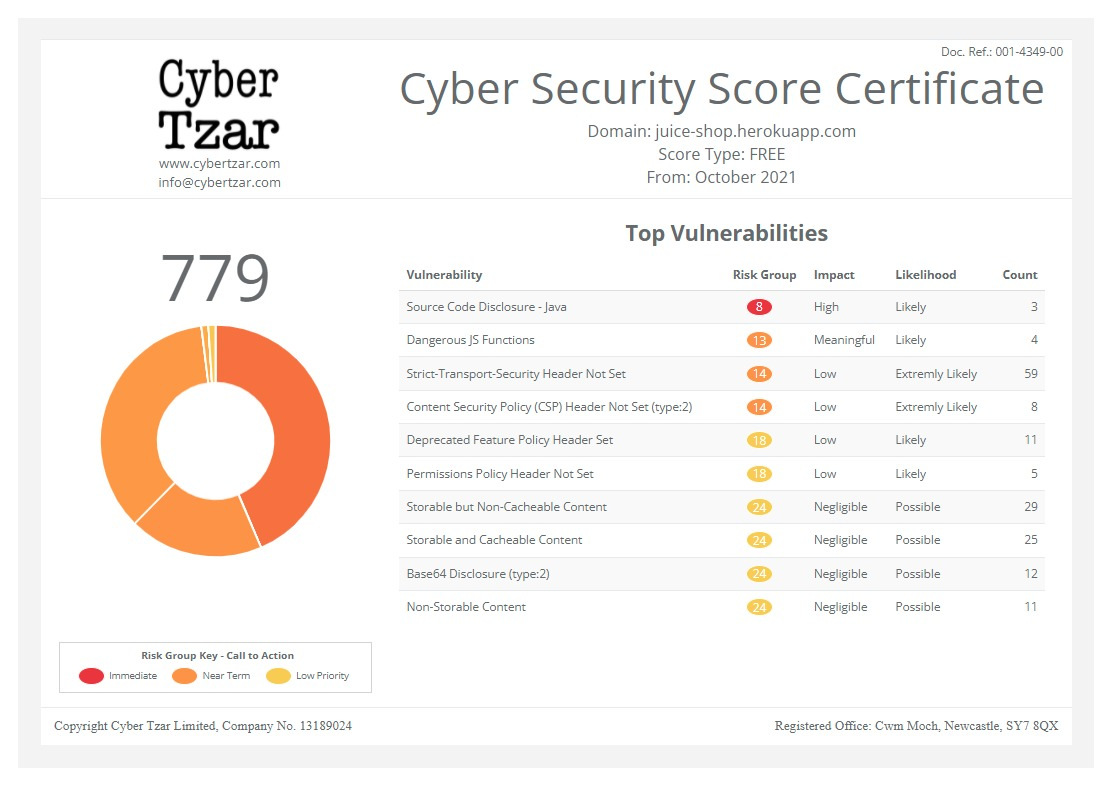
First slide label
Some representative placeholder content for the first slide.
Second slide label
Some representative placeholder content for the second slide.
Third slide label
Some representative placeholder content for the third slide.
Modernising access in higher education
published on 2026-06-09 09:26:16 UTC by Mark FletcherContent:
ID Card Centre discusses its approach to upgrading access systems in centuries-old higher educational institutions
There is a particular irony in the challenge facing many of Britain’s oldest and most celebrated educational institutions.
The very qualities that make them extraordinary, their centuries of accumulated knowledge, sprawling estates and complex departmental structures, are the same qualities that make modernising their security and identity infrastructure a formidable task.
Cambridge University Library illustrated this challenge for trusted supplier of identity and access control products, ID Card Centre. 600 years old and housing more than eight million books, the library is a central resource on campus with high footfall that requires robust access management.
When the department realised they needed to upgrade their student and staff cards to MIFARE smart card technology, they faced a familiar problem for estate and IT managers across higher education: Their existing hardware and software simply did not support the new standard.
It’s instinctive, in this case, to assume the worst and that a full and expensive system overhaul is unavoidable. However, this isn’t always correct.
The real cost of doing nothing
It’s important to understand why the upgrade was necessary in the first place. MIFARE technology is a significant step up from legacy magnetic stripe or basic proximity cards.
It’s an encrypted, contactless smart card format that offers far greater security, supports multiple applications on a single card and integrates more effectively with modern access control, library management and database systems.
At Cambridge, card-based access is essential for library borrowing, building entry and IT systems. Maintaining outdated formats poses significant risks: Legacy cards are more vulnerable to cloning and duplication, offer limited integration capabilities and are often unsupported by modern software.
The key question is not whether to upgrade, but how to do so in a proportionate, cost-effective and minimally disruptive manner.
Understanding complexity before prescribing solutions
For the Cambridge project, ID Card Centre emphasised understanding the institution’s specific requirements before recommending any hardware or software.
The university’s needs were layered: They required the ability to print and encode multiple card designs, link to several databases, including an Oracle system and push updates across multiple interconnected platforms simultaneously. A generic approach wouldn’t have served them well.
Ben O’Brien, Managing Director, ID Card Centre said: “This diagnostic phase and the genuine understanding of an institution’s operational architecture before arriving with a product in hand are something the security and identity sector would do well to champion more consistently. Educational institutions are not homogeneous.
O’Brien continued: “A further education college, an apprenticeship training centre and a Russell Group university each carry distinct access control challenges, user volumes, data governance requirements and budget constraints. The solution that works for one will not automatically translate to another.”
In Cambridge’s case, the answer lay in a modular card management software platform capable of supporting MIFARE encoding as standard, with the flexibility to be configured to the university’s precise specifications at the point of installation, including the exact replication of existing card designs, an often-overlooked requirement that carries real practical significance when rolling out cards across a large, established estate.
The budget question
Price is often a factor in the education sector, and it would be disingenuous to write about security upgrades in academic settings without acknowledging it.
Procurement processes in higher education typically require multiple competitive quotes and the pressure on estates budgets, particularly in the current climate, means that value for money is as important a criterion as technical capability.
This creates a responsibility for suppliers operating in the sector to be transparent, competitive and willing to align their offerings with what institutions need, rather than defaulting to overspecified or overpriced configurations.
A price-match promise, backed by genuine product knowledge and post-installation support, eases procurement teams’ real concerns.
The Cambridge deployment was ultimately awarded based on competitive pricing, technical expertise and the confidence that came from working with a team that had demonstrably understood the brief.
The success of the initial installation has since led to two further system purchases, with a wider rollout across additional areas of the university in progress.
A broader lesson for the sector
The adoption of smart card technology in education is an ongoing transition, not a passing trend. Institutions across the UK are progressing at different rates and from various starting points.
For many, the main barrier is uncertainty about cost, compatibility with existing infrastructure and potential disruption.
The Cambridge case shows that barriers are often lower than expected when the right expertise is involved early.
Security and identity specialists should focus on translating complex institutional requirements into practical, scalable solutions and provide honest guidance on what is truly needed.
As campuses evolve with higher footfall, greater digital integration and rising expectations for security and the student experience, the identity card has become essential infrastructure. Like all infrastructure, it must be taken seriously.
https://securityjournaluk.com/modernising-access-in-higher-education/
Published: 2026 06 09 09:26:16
Received: 2026 06 10 09:32:51
Feed: Security Journal UK
Source: Security Journal UK
Category: Security
Topic: Security
Views: 0
