Cyber Security News Aggregator
.Cyber Tzar
provide acyber security risk management
platform; including automated penetration tests and risk assesments culminating in a "cyber risk score" out of 1,000, just like a credit score.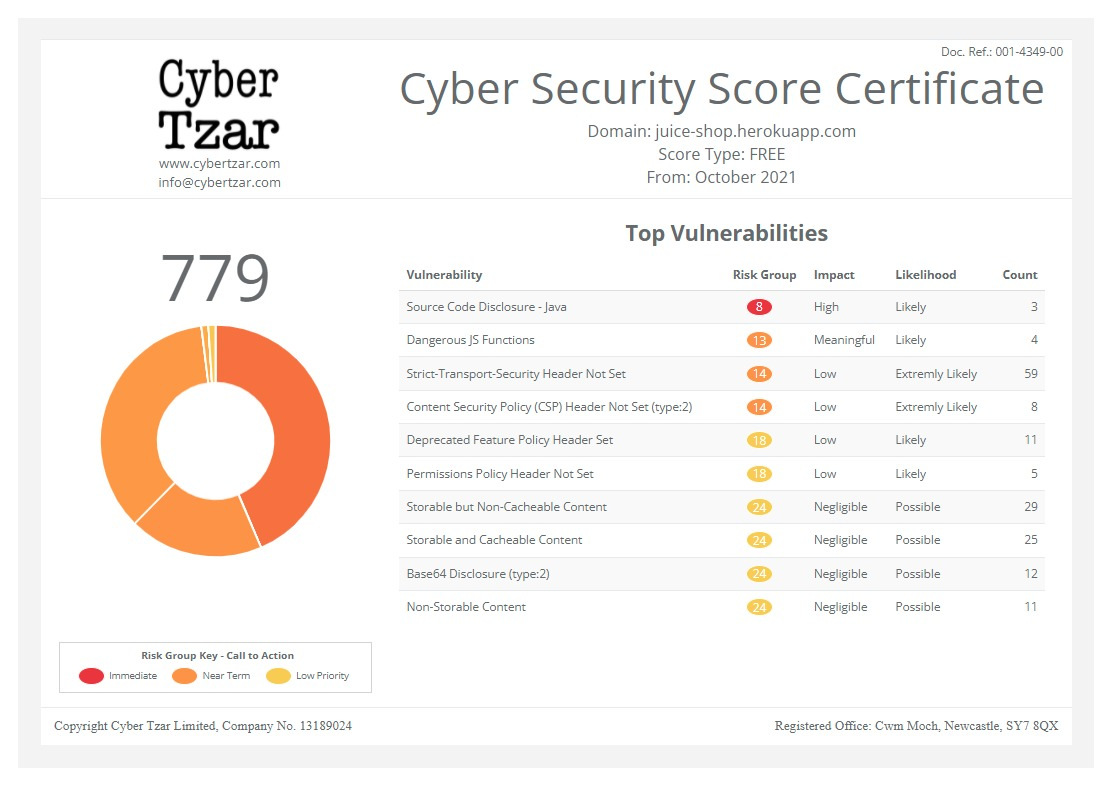
First slide label
Some representative placeholder content for the first slide.
Second slide label
Some representative placeholder content for the second slide.
Third slide label
Some representative placeholder content for the third slide.
Taking control of AI with Aventail
published on 2026-10-12 09:26:05 UTC by Eve GoodeContent:
Digital Content Editor, Eve Goode sat down with Joseph Ward, CEO of Aventail (formerly Locai) to discuss the security risks of relying on external AI providers and how organisations can retain control.
What role does Aventail play within the security industry?
At Aventail, we focus on giving organisations control over how they use AI.
That includes the ability to choose which models they use, what data they share, where a model runs and where its outputs go.
For much of the last decade, the cloud security conversation centred on whether an organisation’s data was safe.
AI adds another question: who controls the technology that is increasingly involved in its decisions and workflows?
We are no longer simply trusting someone else to store our data, but trusting their technology to think with it. That makes AI sovereignty a security issue.
What are the biggest security risks when relying on external AI and cloud providers?
A major risk is losing visibility and control across the AI data chain.
Security leaders need to understand which models are being used, where the information they ingest goes, what happens to their outputs and who can access them.
There is also the risk of creating a single point of dependency.
Much of today’s AI ecosystem runs through frontier labs’ APIs.
An organisation might build an entire product or capability around one provider, but that provider could change its pricing, restrict access, alter the available models or change its terms.
Any of those decisions could have a significant impact if the organisation has no fallback.
Imagine building a hospital having one single supplier for a critical medicine.
With AI, switch electricity for model access.
That dependence becomes particularly consequential as AI moves closer to functions such as electricity network management and defence planning.
What does AI sovereignty mean in practical terms for security leaders?
It means retaining meaningful choices about how AI is used.
An organisation should be able to decide which models are appropriate for a task, what information those models can access, where they run and where their outputs go.
Security teams also need transparency across that chain, end to end.
That does not mean every workload must stay in-house. Some may comfortably run through an external provider.
More sensitive work may need to stay on-premises, on-device or within infrastructure the organisation controls.
The point is to make that decision deliberately, based on the sensitivity of the work, rather than discovering later that there was no choice.
How can organisations reduce the risks associated with becoming too dependent on external AI providers?
They can start by identifying where they are dependent on a single provider and what would happen if access, pricing or terms changed.
They should then make it possible to move between models where appropriate, rather than building every workflow around one provider’s API.
Open-weight models are one option. Instead of accessing a model only through somebody else’s API, an organisation can run it within an environment it controls.
A healthcare provider, for example, could use AI with sensitive patient information without routinely sending that information to a frontier model provider.
Running models yourself brings responsibilities for infrastructure, maintenance and security, and may cost more for some workloads.
The aim is to decide where a managed dependency is acceptable and where greater control is essential.
How will growing regulatory scrutiny affect organisations’ approach to AI sovereignty?
It will make visibility into AI systems and their dependencies more important.
Organisations need to be able to account for the models they use, the information those models receive, how decisions are made and what happens to the outputs.
Technological sovereignty is already moving up the agenda in Europe, where the EU is investing in cloud and AI capacity to reduce dependencies across the technology stack.
For individual organisations, growing scrutiny should prompt a closer examination of where their AI services run, who controls them and whether they can change course if they need to.
Finally, what questions should CISOs ask before trusting an AI provider with the company’s sensitive data?
I would start with:
- Where is our data going?
- Which model will process it and where will that model run?
- Who can access the inputs and outputs?
- Which parts of the chain do we actually control?
Then I would ask about the dependency itself:
- Can we change models or providers?
- What happens if the service changes or access suddenly disappears?
- Do we have a workable fallback?
AI sovereignty does not necessarily mean doing everything yourself, it means retaining the ability to choose.

Joseph Ward is Co-Founder and CEO of Aventail. He has worked in AI since 2018, spanning production deployments and neuromorphic computing research. Before Aventail, he co-founded SmallSpark, a space tech company applying AI to defence and aerospace engineering, and led the development of the UK Ministry of Defence’s first generatively designed rocket engine.
https://securityjournaluk.com/taking-control-ai-aventail-joseph-ward/
Published: 2026 10 12 09:26:05
Received: 2026 10 13 13:18:40
Feed: Security Journal UK
Source: Security Journal UK
Category: Security
Topic: Security
Views: 1
