Cyber Security News Aggregator
.Cyber Tzar
provide acyber security risk management
platform; including automated penetration tests and risk assesments culminating in a "cyber risk score" out of 1,000, just like a credit score.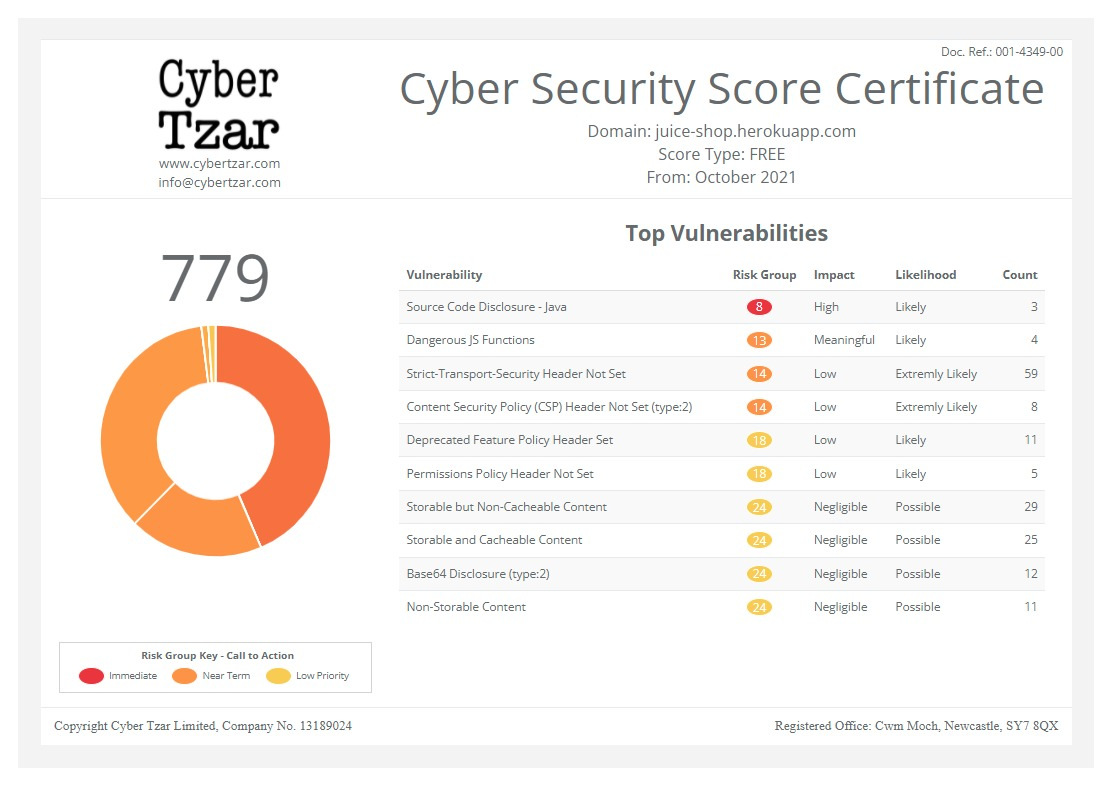
First slide label
Some representative placeholder content for the first slide.
Second slide label
Some representative placeholder content for the second slide.
Third slide label
Some representative placeholder content for the third slide.
LINX drives network resilience, cloud and AI growth in new UK strategy
published on 2026-10-13 16:04:12 UTC by Eve GoodeContent:
LINX launches Cloud Connect at Manchester exchange to increase resilience and improve control over cloud connectivity.
The London Internet Exchange (LINX) has revealed that it is driving network resilience, cloud and AI growth with a new strategy, traffic and capacity increases, product launches and pricing promotions.
According to LINX, the refreshed strategy centres on connecting with LINX’s global member base, building and strengthening strategic partnerships, and refreshing its brand at Capacity Europe.
Three-year strategy
LINX revealed that it is focusing on building a stronger, more interconnected UK as a key pillar of its new three-year strategy.
As part of the UK’s Critical National Infrastructure, LINX operates 5 IXPs across England, Scotland and Wales. Over 75% of their 900+ strong global membership are present at the LINX interconnection points in London, LON1 and LON2.
“The best service”
Jennifer Holmes, CEO for LINX commented: “We are and always will be the London Internet Exchange, we are proud of the part we have played in the evolution of the Internet in the UK and are confident to have the engineering in place that means we are ready for what’s next, whether that’s increasing AI workloads, cloud demand or new applications we haven’t yet imagined.”
“From automation to scalable ports and product innovation, we want to deliver the best service to our members, which ultimately means the best online experience for end users in the UK and beyond.”
Recent launches
Earlier this year, LINX launched Metro Resilience, a pricing initiative to encourage network resilience in London.
Networks can now take mirrored ports and services on LINX’s technically diverse hubs LON1 and LON2 for less.
The company revealed that in July alone, as a not-for-profit organisation, it gave back over £41k in savings to their membership from this new pricing initiative.
LINX’s UK strategy also sees the launch of Cloud Connect at LINX Manchester, to support a city that continues to emerge as the digital point of the North, providing diversity and resilience from London and designation as the UK’s most AI-ready city.
Cloud Connect provides direct access via members’ existing LINX ports to Amazon Web Services (AWS) and Google Cloud Platform (GCP) to reduce latency, increase resilience and improve control over cloud connectivity.
The company highlighted that the Manchester launch was to keep traffic local to the North and it now has over 130 networks connected from its five data centre partner points of access.
The rapid growth over the last couple of years reflects increasing demand for high-capacity, resilient connectivity across the region, driven by the expansion of AI infrastructure, hyperscalers and content delivery networks, as well as Manchester’s established strengths in media, sports and technology.
Earlier this year, LINX saw their regional IXP in Manchester tip the 1Tbps mark in traffic, placing it within the top 10 IXPs in Europe.
“Constant and to a high level”
“A strong focus and growth in the North of the UK is also part of our strategy for the next three years.
“This may be new strategic partners or product innovation, but our core services and member experience, including our technical expertise and 24/7 NOC remains constant and to a high level,” Holmes concluded.
https://securityjournaluk.com/linx-resilience-cloud-ai-three-year-plan/
Published: 2026 10 13 16:04:12
Received: 2026 10 13 16:20:38
Feed: Security Journal UK
Source: Security Journal UK
Category: Security
Topic: Security
Views: 0
