Cyber Security News Aggregator
.Cyber Tzar
provide acyber security risk management
platform; including automated penetration tests and risk assesments culminating in a "cyber risk score" out of 1,000, just like a credit score.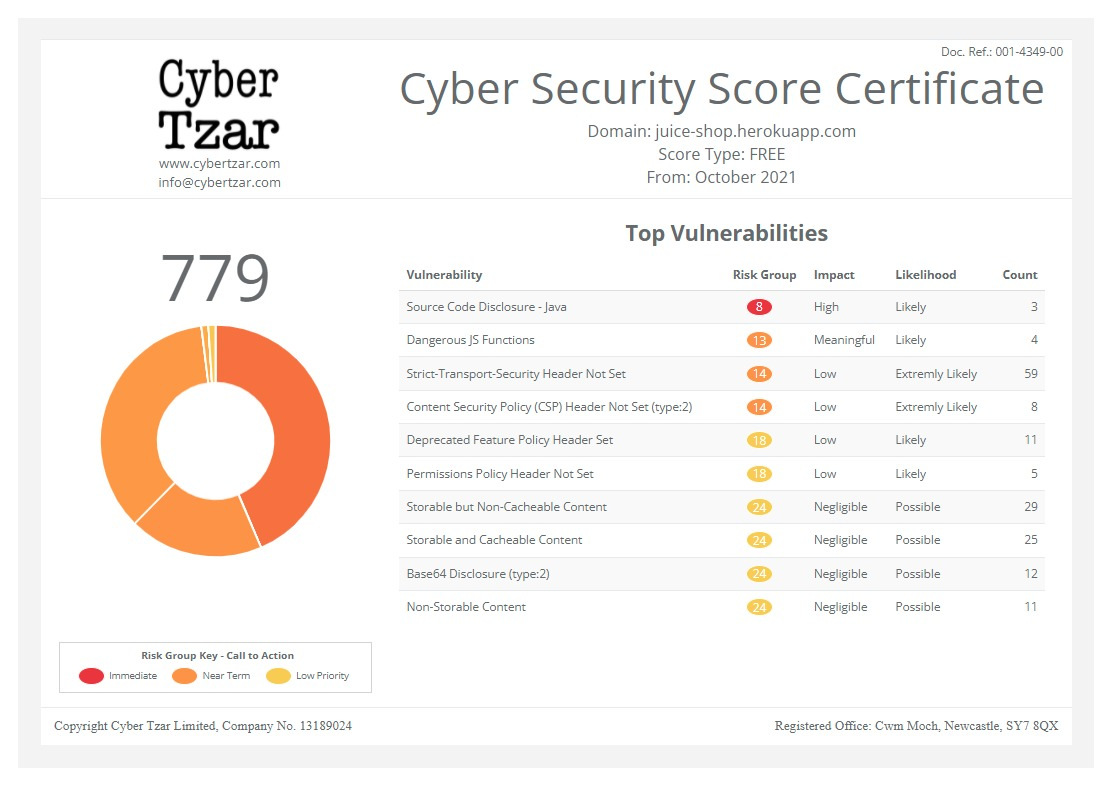
First slide label
Some representative placeholder content for the first slide.
Second slide label
Some representative placeholder content for the second slide.
Third slide label
Some representative placeholder content for the third slide.
The next phase of AI in the ARC
published on 2026-10-14 10:30:57 UTC by Mark FletcherContent:
DeepAlert explains that future of scaling security screening operations is not the number of screens you deploy, it’s how AI can help more effectively manage and contextualise the data
Scale in surveillance has always been arithmetic. The more sites you monitor, the more operators you need on shift, and the more the operation costs to run.
For most of the industry’s history that relationship has been close to linear, and it has quietly set the ceiling on how large a monitoring business can grow before its margins start working against it.
AI video analytics changes that equation. But as an industry we have so far spent most of that change in a single place: filtering out nuisance alarms.
That was the right first move, and it remains essential. It is not, however, where the value ends and the operations that understand the difference are the ones that will scale over the next few years.
Filtering is the floor, not the ceiling
Traditional surveillance systems generate enormous volumes of alerts. Wind in a tree line, a headlight sweep across a wall, rain on a lens, an animal crossing a yard.
Each one arrives at an ARC indistinguishable from a genuine intrusion, and each one costs an operator a slice of attention they cannot get back.
Filtering that noise out of the operator’s workflow has become the bread and butter of AI in this sector, and for good reason. It is the change operators feel on day one.
But false-alarm reduction is a hygiene factor rather than a differentiator. It is increasingly assumed by buyers, claimed by every vendor and, importantly, it only addresses the events that should never have reached a human in the first place.
The harder and more valuable question is what happens to the alerts that survive the filter. A clean queue is still a queue. Someone still has to look at each item, understand what they are seeing, decide whether it warrants a response and then act.
That cognitive load is where operator capacity is actually consumed, and it is largely untouched by filtering alone.
From detection to understanding
The more consequential shift underway is the move from object detection to behavioural analysis, from “there is a person in this scene” to “what is that person doing, and does it represent a risk?”
This distinction matters most in exactly the environments the UK market is growing into. On a fenced compound after hours, presence alone is a reasonable proxy for threat.
On a site with legitimate 24/7 access, such as self-storage, logistics yards, student accommodation, forecourts or mixed-use developments, it is not.
People are supposed to be there. Detecting them tells the operator almost nothing, and a system that alerts on every one of them has simply relocated the noise problem rather than solved it.
Behavioural analysis approaches the problem differently. Rather than asking whether a person is present, it looks for the patterns that tend to accompany risk: someone lingering where people normally pass through, someone taking deliberate steps to obscure their identity, movement that does not fit how the site is ordinarily used.
It is a narrower and more useful signal, and it is the point at which analytics starts contributing to the decision rather than just to the detection.
Case study: Doncaster Security Operations Centre
A practical example of this evolution is DeepAlert’s Suspicious Activity model, deployed across self-storage sites monitored by Doncaster Security Operations Centre (DSOC) in the UK.
Self-storage is a near-perfect illustration of the problem. Access is legitimate around the clock, footfall is constant and the behaviours that matter are indistinguishable from ordinary use if you are only counting people.
DSOC approached DeepAlert looking for a way to identify genuine threats in that environment, and the two teams worked together to introduce behaviour-based analytics into the self-storage monitoring solution.
After several weeks of scoping, data collection and model development, the result was an intelligence layer that disregarded legitimate site users while detecting and alerting on suspicious behaviour.
For DSOC’s operators, that changed the nature of the work. Interventions could be prioritised properly and escalated only where escalation was warranted.
The operational impact was immediate and measurable. Operator efficiency improved, which allowed the monitoring centre to take on a larger number of sites without adding headcount, improving the operational margin in the process.
Response times came down and response quality went up, because the alerts arriving were actionable and gave operators enough context to make a well-informed decision quickly.
The business case for intelligent scaling
The DSOC deployment demonstrates three things that generalise well beyond self-storage.
First, it breaks the linear relationship between sites monitored and operators employed. Growth stops requiring proportional headcount, which is the single biggest structural constraint on a monitoring business.
Second, it changes what an ARC is selling. A filtered alert stream is a cost saving. An intelligence-led service that surfaces meaningful activity with context attached is a different commercial proposition, and it supports a different conversation at renewal.
Third, it works with what is already installed. These models apply to existing camera estates and route into the monitoring platforms operators already use, which means the upgrade path does not begin with ripping out hardware.
What comes next: from accurate detection to prioritisation
The next stage of this progression to agentic reasoning is already underway, and it moves from classifying individual events to reasoning across all of them.
The key here is an agentic prioritisation layer which would reason across all events in the queue. It would then order operator attention accordingly, so the most urgent items are addressed first.
Bespoke rules, configured through free-form, are then applied to each site, or client, in order to add a structured picture of how a site operates, and these rules are what gives the prioritisation layer something to reason against. This provides and assembles site context.
The basic detection layer is the foundation, which detects and classifies everything upon which the alert prioritisation layer and the bespoke rules are layered.
Taken together, the direction of travel is clear enough. Detection told operators something happened. Classification told them what it was.
The layer now arriving tells them what to deal with first and lets them ask their own questions of the footage in their own words.
The monitoring operations that scale over the next few years will not be the ones watching the most screens, they will be the ones whose operators spend their attention on decisions that matter, and whose systems are built to work out which those are.
https://securityjournaluk.com/the-next-phase-of-ai-in-the-arc/
Published: 2026 10 14 10:30:57
Received: 2026 10 14 10:45:21
Feed: Security Journal UK
Source: Security Journal UK
Category: Security
Topic: Security
Views: 0
