Cyber Security News Aggregator
.Cyber Tzar
provide acyber security risk management
platform; including automated penetration tests and risk assesments culminating in a "cyber risk score" out of 1,000, just like a credit score.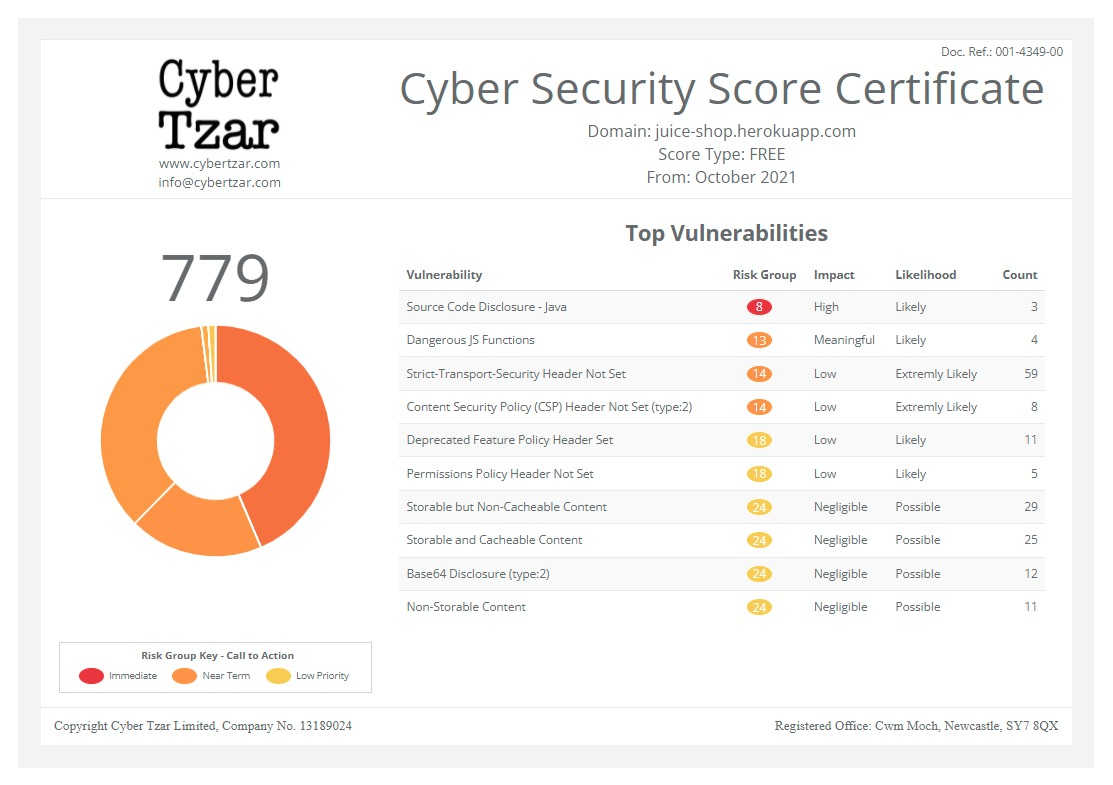
First slide label
Some representative placeholder content for the first slide.
Second slide label
Some representative placeholder content for the second slide.
Third slide label
Some representative placeholder content for the third slide.
iLOQ: Simpler, greener and more OPEX friendly
published on 2026-11-04 09:45:42 UTC by Mark FletcherContent:
Oskar Sörensson, CEO, iLOQ, discusses his company’s removal of complexity and maintenance burdens, while still delivering class-leading security solutions
Can you give us some background about iLOQ?
iLOQ was founded in Finland in 2003, not out of a technology idea but out of a customer challenge around re-keying. It was also early with NFC, phone-based key technology, at a time when people weren’t really thinking about NFC in this way.
Since then, software has taken a much bigger role. About 80% of our R&D today is cloud and software, with the rest in mechatronics and hardware, so the company has really transformed into a cloud-based technology business.
We’re now sold in 60 countries and are one of the fastest growing companies in the industry. That transformation is a big part of why I joined iLOQ as CEO.
We want to be a thought leader, a forerunner that disrupts our industry but also brings the industry along with us, whether that’s on security, the cloud or user friendliness.
How would you differentiate iLOQ and its products from other vendors, particularly on cost and maintenance?
We eliminate the burden of maintenance because our locks are battery- and cable-free, so they don’t require any maintenance, and there’s no battery replacement required.
iLOQ also retrofits easily into existing doors. By replacing the mechanical cylinder while keeping the existing lock body and door infrastructure, organisations can upgrade to smart access quickly and cost-effectively.
We’re maybe two to three times more expensive than a mechanical key solution, but the operational expense savings are significant; payback is typically very quick and it simplifies usage.
Optimising the customer’s OPEX is where I intend to keep the focus as CEO.
How would you describe iLOQ’s approach to innovation and customer challenges?
One of the things that stood out to me when joining iLOQ is that the company has moved away from the old way of thinking, where it’s about whether a computer is 16-bit, 32-bit or 64-bit.
It’s not about the bits; it’s about what you do with them, and how we can help our customers have better security, a better way of working and real savings. That’s the thinking behind every new application we build or every improvement we make to usability.
You have a well-established presence in Scandinavia and Central Europe. What applications and industries are you primarily supporting?
We started in multi-family properties. The build-to-rent market is very lucrative for us, because you have a lot of tenants coming and going and there’s always key-management hassles.
High-people-flow buildings have always been a focus for us, then educational buildings, university campuses, hospitals and commercial estates.
Today, we secure most European telecom sites, fibre grids, national grids for large energy companies, wastewater-treatment plants, some defence sites and logistics.
There’s a lot of demand for securing infrastructure in the current world, and the bigger and larger the customer, the more value we bring them.
With UK compliance now achieved, what technology and solutions will be of most interest? What are the core products for the UK market?
For us, the S50 has been our corporate, phone-key-based solution for critical infrastructure and some commercial applications in the UK.
We also now offer the 5 Series+, our latest product – which we introduced a year ago in the US and more recently in Europe – aimed more at residential use, so multi-residential and build-to-rent.
We’ve also been investing in a local cloud and data-hosting presence in the UK, which is mandatory.
The UK has a lot of retrofitting demand and a lot of ageing building stock, and that market is a good fit for iLOQ, because we’re unique in retrofitting existing buildings.
Where is the initial UK focus, commercial or residential, and how do you see it evolving?
iLOQ has started a lot in critical infrastructure and some complex multi-site estates, and that will remain a priority.
From there, the natural next steps are ports, multi-family and student accommodation. Healthcare security is also a good fit. It goes step by step, and in my first months I’ll be looking closely at high-people-flow applications, where there’s a lot of key management and a lot of challenges.
Why would you say the UK is lagging in smart security uptake compared to North America and Australia?
I’m not sure “lagging” is the right word. The building stock plays a role; there’s a lot of retrofitting involved, and that causes challenges: how do you add Wi-Fi, how do you add wires, that kind of modernisation is cumbersome.
Part of it has also been a lack of a truly suitable solution. Our view is that the technology must adapt to the building, not the other way around, since you can’t change the building.
Different markets are simply at different stages, and the mindset isn’t what’s missing.
Are there any flagship UK applications you can point to?
We don’t have public references approved yet; they’re still in progress, but iLOQ has been working with some major critical-infrastructure organisations in the UK in recent years and has had great success there, including in telecom, transportation and ports. We expect to share something exciting this year.
Growing the UK business is one of the things I’m most looking forward to in this role, along with helping people understand that these technologies can be applied to buildings that already exist, rather than only in new builds.
How are you facilitating digital integration with up- and downstream solutions?
Integration is at the core of everything we do. You can’t have an isolated locking system today; data must flow through, and customers want an integrated, seamless system.
We’ve built integrations with Honeywell Pro-Watch, Gallagher and Genetec in the UK, so people can manage access and maintenance from one single, secure system, alongside open APIs and an SDK.
Looking ahead, AI is a big topic. As more systems become connected, there’s a real opportunity to develop AI-based applications that help move the industry forward.
This has traditionally been quite a conservative industry, and the incumbents now face a real challenge around the pace of innovation.
iLOQ is fortunate to already be built on a native cloud architecture, so we can integrate with software-based systems without the legacy issues that make secure, transparent data transformation between platforms difficult. That foundation was a big draw for me in taking on this role, and there are real opportunities here for players in this market.
What have been the biggest end-user pain points with legacy locking, and how does NFC solve them?
First, the physical key issues: lost, stolen or unreturned keys. And, with a mechanical key, you can’t even see that it’s been used, so there’s effectively no audit trail and no real security.
Then there’s battery logistics, which can be a real burden, and the lack of any audit trail in mechanical systems.
With NFC, the phone acts as both the credential and the power source, so you don’t need a separate battery or a separate credentials and you can share access from one phone to another or open a door remotely.
It solves a lot of the problems we see in traditional locking systems, and the technology will keep evolving. We’ll likely see hybrid solutions emerge over time.
How does battery-free technology support ESG goals for UK customers?
There’s no battery waste, and we sometimes say the greenest battery is the one that’s never used.
We call ourselves a born sustainable company, battery-free from day one, built around energy harvesting and ultra-low energy consumption. If you calculated our installed base as if every lock were battery powered, we estimate we’ve saved over 200 million batteries.
Meanwhile, most competitors in the industry are adding bigger, denser batteries to make them last longer, without solving the core problem.
What role does data and audit trail play in winning over UK decision makers?
Digital access adds visibility and accountability. You can see who accessed a site, when and for how long, and even track key allocation and where an opener was released on site.
Digital management lets you confirm the right people have the right access, and you can remove access instantly and in real time, rather than rekeying an entire building, which is costly and slow with mechanical keys.
What’s next for iLOQ R&D? Any hints on future innovation?
We always start from removing complexity rather than adding it. We’ll keep driving our energy-harvesting, ultra-low-power technology globally, and we want to get software even more into the mix, which means continuing to work on AI, both internally and in terms of what it can bring our customers.
We may start to see sub-segment optimised solutions, for example built around multi-family property management or critical infrastructure operation centres, adding more value on the data and software side, not just the lock and key.
What advice would you give security managers considering a shift to keyless access control?
Really think about your operational expenses, where you’re spending money today, where you feel inefficient and what your current pain points are.
Many organisations have been living with the same system for twenty or thirty years without stopping to calculate what that time actually costs.
If you translate those hours into money, it often points to a wiser investment; one that makes a place more secure and much easier to use.
https://securityjournaluk.com/iloq-simpler-greener-and-more-opex-friendly/
Published: 2026 11 04 09:45:42
Received: 2026 11 05 17:21:48
Feed: Security Journal UK
Source: Security Journal UK
Category: Security
Topic: Security
Views: 0
