Cyber Security News Aggregator
.Cyber Tzar
provide acyber security risk management
platform; including automated penetration tests and risk assesments culminating in a "cyber risk score" out of 1,000, just like a credit score.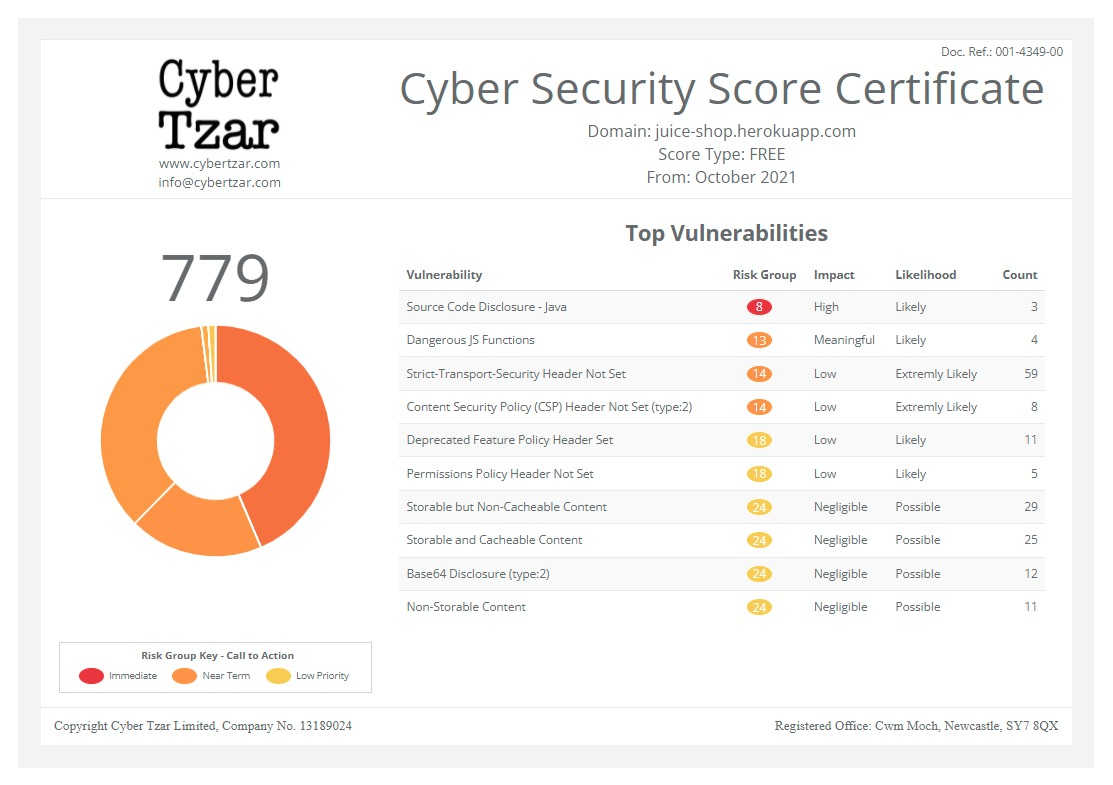
First slide label
Some representative placeholder content for the first slide.
Second slide label
Some representative placeholder content for the second slide.
Third slide label
Some representative placeholder content for the third slide.
Physical response and recurring revenue in the security industry
published on 2026-11-03 08:45:00 UTC by Eve GoodeContent:
Security Journal UK hears exclusively from Alex Booth, Managing Director of AURA UK about security installation.
For security installers and integrators, the commercial value of an installation increasingly extends beyond the initial provision of equipment.
As competition intensifies and customers demand more comprehensive security solutions, the ability to establish sustainable, recurring revenue streams is becoming a more important factor in long-term business performance.
Maintenance agreements and alarm monitoring contracts have traditionally provided the foundations of this model.
However, physical response represents a further opportunity for installers to broaden their service offering, strengthen customer relationships and generate additional predictable income.
The underlying proposition is straightforward.
While modern security systems have become increasingly sophisticated in their ability to detect and communicate potential threats, detection alone does not necessarily guarantee intervention.
For customers, the effectiveness of a security system ultimately depends not only on identifying an incident, but also on establishing an appropriate and reliable process for responding to it.
Extending the value of security infrastructure
The traditional installation model is inherently transactional.
Revenue is principally generated through equipment sales, system design and installation, with subsequent maintenance contracts providing a degree of financial continuity.
Although this approach remains commercially viable, it exposes installers to fluctuations in project demand, competitive pricing pressures and broader economic conditions affecting capital expenditure.
Recurring service agreements offer a means of mitigating these pressures by establishing more predictable income and maintaining continuous engagement with customers.
Incorporating physical response into these arrangements can further strengthen their commercial value.
Rather than positioning an alarm system primarily as a mechanism for detecting unauthorised activity, installers can offer customers a more comprehensive security proposition encompassing detection, monitoring and physical intervention.
This is particularly relevant for commercial premises, vacant properties and organisations managing geographically dispersed sites, where relying exclusively on keyholders or emergency services may be impractical.
Expanding services without expanding infrastructure
One of the principal obstacles historically associated with physical response has been the operational infrastructure required to deliver it.
Recruiting security personnel, maintaining patrol vehicles and managing deployment arrangements across multiple locations involves substantial fixed costs.
For most independent installers, establishing these capabilities internally would be unviable.
However, the development of technology-enabled response networks is creating alternative models of service delivery.
Through partnerships with specialist providers, installers can incorporate physical response into their existing customer relationships without assuming responsibility for maintaining an independent guarding operation.
Technology can facilitate the coordination of these arrangements by connecting alarm monitoring processes with networks of available security personnel, enabling vetted professionals to be automatically dispatched when an alarm is activated.
Developing a sustainable model
The commercial viability of these comprehensive security packages depends on balancing customer value with predictable service delivery costs.
A tiered approach offers one potential framework.
Such structures allow installers to differentiate their offering according to customer requirements while creating opportunities to increase revenue per account.
However, pricing arrangements must account for the underlying economics of response provision.
Installers should establish whether response partners operate through fixed subscriptions, individual attendance charges, or hybrid arrangements and determine how repeated activations, false alarms and exceptional incidents are treated.
Contractual clarity is equally important.
Customers must understand the circumstances under which attendance will be initiated, the scope of a responder’s responsibilities and any limitations affecting service delivery. Without these safeguards, the financial benefits of recurring revenue risk being undermined by unpredictable operating costs or unrealistic customer expectations.
Strengthening long-term relationships
Beyond the immediate financial opportunity, incorporating physical response also has implications for customer retention and a company’s competitiveness.
Installers capable of addressing both the technological and operational dimensions of security can establish relationships that extend beyond periodic maintenance or equipment replacement.
This broader engagement creates opportunities for ongoing service reviews, system upgrades and the expansion of contracts across additional premises.
It also reflects a wider evolution within the security industry towards service-oriented business models, in which customers increasingly evaluate providers according to the outcomes they can deliver rather than the equipment they supply.
For installers, physical response therefore represents more than an additional service category.
Properly structured, it offers a means of strengthening commercial resilience, increasing the long-term value of customer relationships and participating more extensively in the security services value chain.
As the industry continues to evolve, businesses that successfully integrate detection, monitoring and physical intervention into comprehensive service propositions will be better positioned to generate sustainable growth.

Alex Booth is Managing Director of AURA UK, where he leads the growth of AURA’s security response platform and its responder network across the market. He brings extensive experience scaling technology-enabled service businesses, building high-performing teams, improving customer experience and developing the operational models needed for sustainable growth. Before joining AURA, Alex helped grow Investis Digital from a startup into an international business and later led companies across fintech and e-commerce. He also sits on the board of the S12 Security Guarding Leadership Group, strengthening AURA’s connection to and understanding of the wider UK security industry.
https://securityjournaluk.com/physical-response-revenue-security-install/
Published: 2026 11 03 08:45:00
Received: 2026 11 05 17:21:49
Feed: Security Journal UK
Source: Security Journal UK
Category: Security
Topic: Security
Views: 0
