Cyber Security News Aggregator
.Cyber Tzar
provide acyber security risk management
platform; including automated penetration tests and risk assesments culminating in a "cyber risk score" out of 1,000, just like a credit score.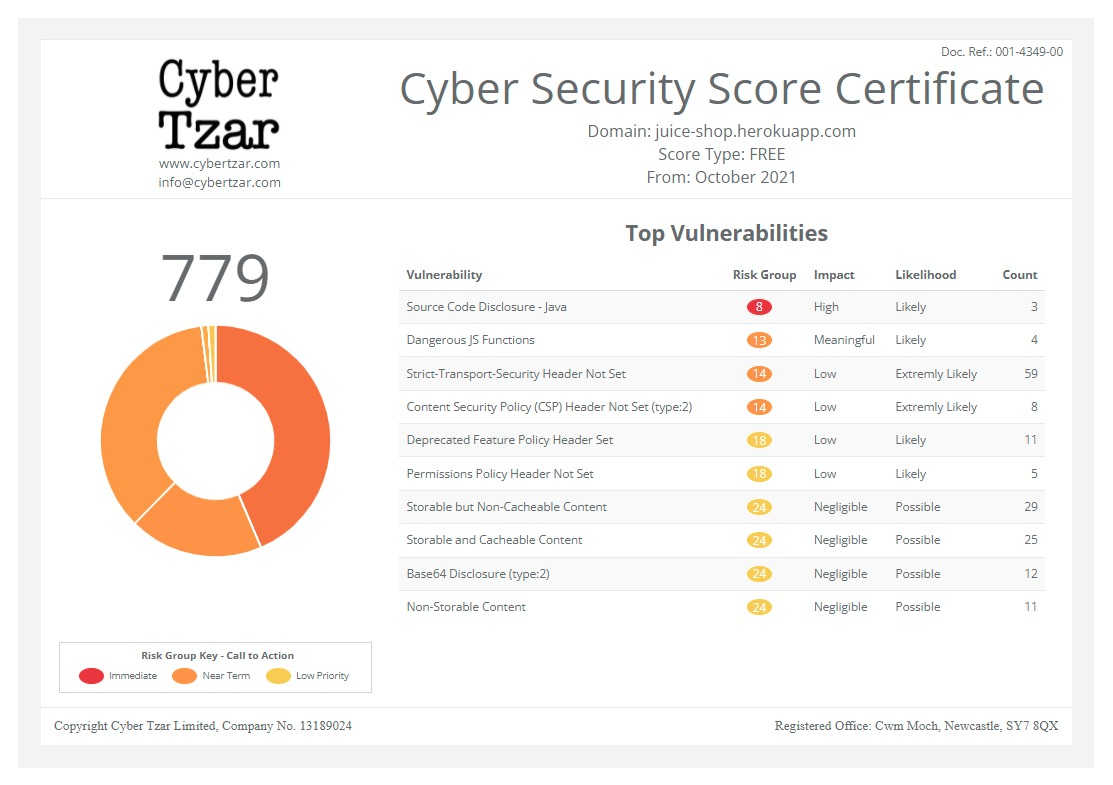
First slide label
Some representative placeholder content for the first slide.
Second slide label
Some representative placeholder content for the second slide.
Third slide label
Some representative placeholder content for the third slide.
Is Cyber Deception a Must-Have This Time?
published on 2026-11-10 00:00:00 UTC byContent:
Cyber deception is drawing renewed interest in the AI era, but it may not become mainstream this time either. Teams can still add decoys to identity, segmentation, secrets, and AI agent projects that already have their attention.

I've been a fan of cyber deception and have witnessed several waves of deception technologies as they emerged and dissipated. Deception is having a resurgence, likely driven by AI's effects on the dynamics between attackers and defenders. Will it gain must-have status, or will it, like the earlier waves, fade away? Let's explore why deception has stalled in the past and what, if anything, is different this time. The deciding factor is how much attention defenders can spare as we race to address other problems that seem more urgent in the age of AI.
Security teams have treated deception as a nice-to-have.
Cyber deception has been a discretionary measure for the defenders. I haven't seen it as a mandate in major cybersecurity frameworks, contracts, or insurance policies. When competing for attention with must-have controls, deception found itself left out of the market at large, with the exception of low-effort, low-cost deployments and some organizations with mature security programs.
Industry analysts treated cyber deception as a nice-to-have, too. Forrester's Josh Zelonis noted in 2018 that enterprises have generally given the technology a lukewarm reception because "it's just something else on their network that they have to deal with." Augusto Barros at Gartner advised in 2019 that organizations check vendors' claims about "the work hours needed to maintain a healthy deception deployment." Mike Privette at Return on Security observed in 2021 that deception was "being considered as table stakes," yet he cautioned that "if you're not good at doing and proving the basics today, this won't help you."
Many of the cyber deception products that existed earlier ended up being absorbed into broader solutions, with Forrester's David Holmes pointing out in 2022 that "deception tech, while super cool, was never able to achieve escape velocity on its own." Larger companies bought four of the five vendors that Mike Privette listed as top to consider. Zscaler agreed to buy Smokescreen in May 2021, shortly before Mike's post, and in 2022 Commvault bought TrapX, SentinelOne bought Attivo, and Proofpoint bought Illusive. As a result, some identity, access, and data protection products now include deception features.
What, if anything, is different now?
Deception may matter more in the AI era.
From the perspective of security architecture, deception plays to the defender's advantage. Per David Bianco, "attackers usually operate with imperfect knowledge" of the environment. Therefore, they're more likely to trip or waste time on decoys. This increases the attackers' costs and gives defenders more of an opportunity to detect and respond to the attack.
AI in the hands of the attackers and employees is disrupting the pursuit of equilibrium that characterizes the attack-defend cycle:
- Faster vulnerability discovery: AI accelerates the discovery of vulnerabilities in software, making it impractical to assume that the organization can address the exploits by quickly patching the vulnerabilities. We need to put effort into strengthening our security architecture more broadly, and cyber deception can be part of that effort. Decoy credentials and systems can reveal an intruder who got in through a vulnerability the organization hasn't patched yet.
- Attack speed: AI speeds up attacks. In the campaign Anthropic reported in 2025, AI performed most of the work at "an attack speed that would have been, for human hackers, simply impossible to match." Gartner warned in 2025 that security built on detection and response "will no longer be enough to keep assets safe from AI-enabled attackers." Instead, Gartner advocated for countermeasures that "act preemptively and independently of humans to neutralize potential attackers before they strike." It named "advanced deception and automated moving target defense" among such capabilities.
- High-volume attacks: At its peak, the AI in the Anthropic case made "thousands of requests, often multiple per second." Deception can slow such attacks down and misdirect them. For example, the US Army is pursuing "agentic deception" to lure adversaries away from its "crown jewels," so that AI-assisted attackers spend "down their tokens" on parts of the network that matter less, which increases their costs.
- Employees' AI agents: AI in the hands of employees can perform unauthorized actions within the organization even without users' malicious intent. Microsoft's Hayete Gallot described such agents in 2026 as overprivileged insiders that "may not behave as intended." Deception could help spot unsanctioned agents acting inside the organization or identify when sanctioned AI goes beyond its boundaries. Researchers at the Institute for AI Policy and Strategy called honeypots "a promising and underused measure" for securing such agents.
Governments have also explored deception. In 2025, the US Navy ran an "assume you are compromised" prize challenge that sought capabilities to "deceive the adversary, learn their tactics." The UK National Cyber Security Centre (NCSC) ran cyber deception trials and saw "a compelling case for increasing the use of cyber deception." In 2026, CISA published its first detailed guide to using cyber decoys.
Investors have backed deception startups, too. For example, Tracebit, founded in 2023, raised $20 million in March 2026, joining established independent vendors such as Thinkst, Acalvio, and CounterCraft.
Limited attention remains the barrier to deception.
While I recognize the benefits of employing cyber deception for defense, I'm skeptical that deception will become a mainstream security control in the current wave. I suspect defenders will keep putting other projects ahead of it, for these reasons:
- Higher priorities: The "AI Vulnerability Storm" briefing, published in 2026 by the Cloud Security Alliance, SANS, and other contributors, advised organizations to "build a deception capability" that uses canaries and honeytokens. Yet the authors listed deception ninth of 11 actions. They rated six actions critical and deception high. Most of the critical actions, on areas such as AI governance and patching, were to start "this week." Asset inventory and hardening, also listed ahead of deception, were to start "this month." For deception, the listed start was the "next 90 days."
- Invisible value: Deception technologies such as honeypots are prized for their low noise-to-signal ratio. But defenders who rarely hear from their honeypots tend to take them for granted next to projects that draw attention. When the NCSC surveyed organizations in its 2025 trials, most believed deception "could offer real value," yet "outcome-based metrics were not readily available." Deception wins also tend to stay out of sight. In the NCSC's trials, 90% of participants said they wouldn't "publicly announce that they use cyber deception."
- Indefinite delay: Planning to deploy cyber deception once the more urgent issues are addressed can delay such projects indefinitely. Deception becoming a core requirement of an established framework can change the priorities. So far, NIST treats deception as a choice. In May 2026, NIST included decoys among its enhanced requirements for protecting sensitive government information, while noting, "There is no expectation that all of the enhanced security requirements will be selected by federal agencies."
Some barriers to deception have eased in the current wave, but the ones tied to defenders' attention remain:
| Barrier | Earlier waves | Current wave | Different now? |
|---|---|---|---|
| Defenders' attention | Teams prioritized foundational work | Teams face more urgent foundational work in the AI era | No |
| Deployment effort | Dedicated decoy deployments that teams had to maintain | Decoys built into some products teams already run | Partly |
| Visible results | Quiet decoys looked idle | Outcome metrics are still scarce, and users stay quiet about wins | No |
| Requirements | Optional in frameworks, contracts, and insurance | Recommended by US and UK government guidance, but voluntary | Partly |
| Perceived need | A nice-to-have against human intruders | Higher stakes with AI attackers and employees' AI agents | Yes |
| Standalone market | Several specialist vendors acquired by larger companies | Independent vendors drawing new investment | Partly |
Incorporate deception into existing foundational efforts.
If you believe cyber deception has a role in your security architecture, start with low-effort approaches such as honeytokens. In addition to considering dedicated open source and commercial deception solutions, check whether your existing EDR, identity, and DLP products support "decoy capabilities without procuring additional tooling," as mentioned in CISA's 2026 guide Using Cyber Decoys to Strengthen Detection and Response.
Also consider adding cyber deception to foundational projects your team is already working on:
- Identity hygiene: As you shape up your identity management practices, consider adding decoy accounts and credentials. For example, identity products from SentinelOne and Proofpoint include decoys, and Microsoft Defender for Identity can tag honeytoken accounts.
- Segmentation and zero trust: While redesigning network access, consider adding decoy services. For example, Akamai's segmentation product and Zscaler's zero trust access products offer such capabilities.
- Secrets cleanup: While inventorying secrets and improving credential management, consider planting honeytokens among them. For example, GitGuardian, which detects leaked secrets, also offers honeytokens.
- AI agent governance: The authors of the "AI Vulnerability Storm" briefing highlighted the need to "define scope boundaries" for AI agents. Decoys can show when an agent crosses those boundaries. As you decide which data and tools each agent may reach, plant decoy credentials, documents, and tools. For example, Thinkst offers a free MCP Canarytoken, a decoy MCP server entry for an agent's configuration file that alerts when an agent connects to the server or calls its tools. You can also build your own decoy MCP server.
Each of these projects already has your team's attention, which teams rarely give to deception on its own.
Deception is likely to remain a nice-to-have for most teams.
Deception may fade again as a standalone market. Even so, defenders will have decoys in some identity, access, and other products they already run. And low-cost, low-effort dedicated solutions will continue to be available. Deception is closest to becoming a must-have in companies with a mature security program and in high-threat organizations, such as government agencies and critical infrastructure operators.
I'd revisit this view if a major framework required deception, insurers began asking about it, or organizations publicly reported decoys stopping breaches. Defenders can help with the last one. If cyber deception helped in your environment, consider sharing what you've learned, even anonymously, so we can all learn from your experience.
https://zeltser.com/cyber-deception-again
Published: 2026 11 10 00:00:00
Received: 2026 11 10 15:40:18
Feed: Lenny Zeltser
Source: Lenny Zeltser
Category: Cyber Security
Topic: Cyber Security
Views: 0
