Cyber Security News Aggregator
.Cyber Tzar
provide acyber security risk management
platform; including automated penetration tests and risk assesments culminating in a "cyber risk score" out of 1,000, just like a credit score.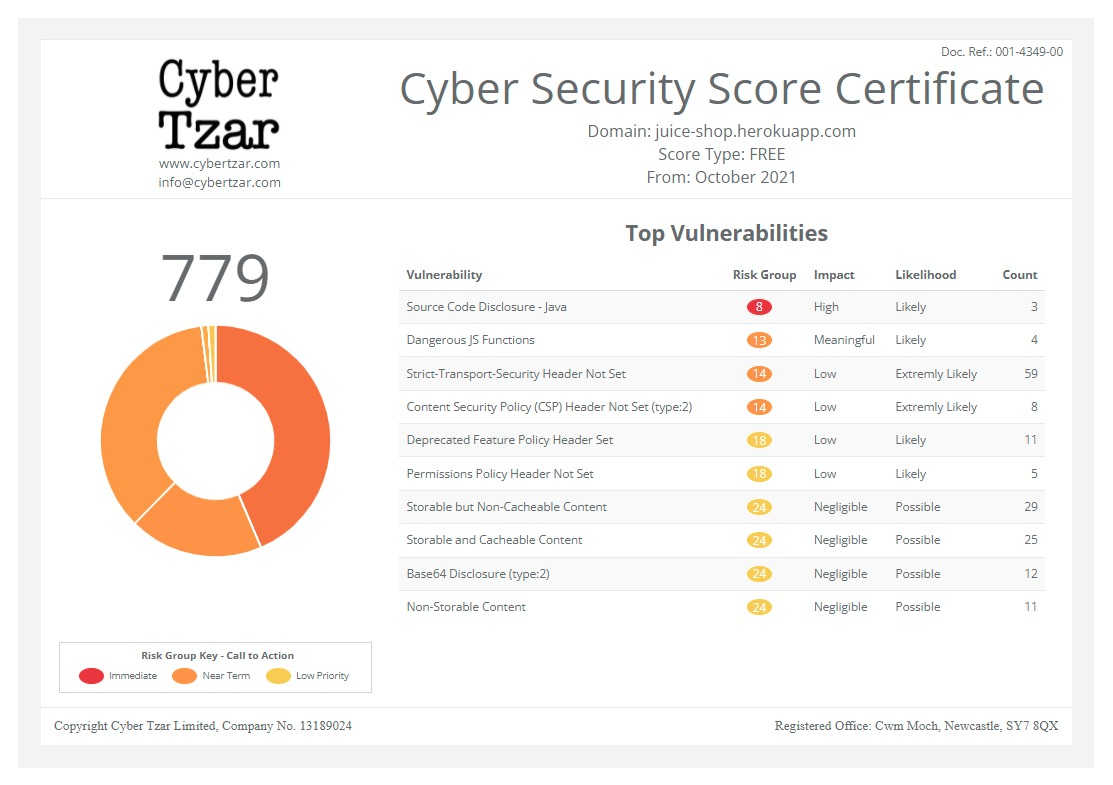
First slide label
Some representative placeholder content for the first slide.
Second slide label
Some representative placeholder content for the second slide.
Third slide label
Some representative placeholder content for the third slide.
A new paradigm in personal security
published on 2026-11-18 09:37:16 UTC by Mark FletcherContent:
Doron Kempel, Founder and CEO, explains how Bond is democratising personal security, closing critical gaps in emergency response and redefining the standard of care for employers
The missing layer in personal security
For decades, the security industry has invested heavily in protecting buildings, infrastructure, assets and information. Yet one of the most important assets of any organisation – its people – remains comparatively underserved.
Organisations deploy sophisticated access-control systems, surveillance technologies, cybersecurity platforms and emergency response procedures.
However, when an employee leaves the office, travels to a customer meeting, works from home or simply walks to their car after a late shift, their personal security often becomes their own responsibility.
Historically, professional personal protection has been reserved for a privileged few: senior executives, high-profile individuals and those operating in particularly dangerous environments.
Bond was founded to change that. By combining artificial intelligence, advanced technology and highly trained human security professionals, Bond has introduced a new category: AI-Powered Preventative Personal Security (PPS).
Its mission is straightforward but ambitious: Personal Security for All.
The proposition is that professional personal security should no longer be a luxury available only to those who can afford dedicated protection.
Technology now makes it possible to democratise personal security, extending sophisticated preventative capabilities to entire workforces and, ultimately, the general public.
Closing two critical gaps: Too early and too late to dial 999
Traditional emergency response systems, including the UK’s 999 service, play an indispensable role in public safety. But they are fundamentally designed to respond to emergencies.
This leaves two critical gaps in personal security.
The first is when it is too early to call 999.
Consider a retail worker closing the store on a late shift, a sales professional travelling through an unfamiliar location, a nurse leaving a hospital after a shift having dealt with an aggressive patient.
These individuals may feel uncomfortable, threatened or uncertain about their safety. Yet the circumstances may not justify calling the police.
In many situations, the person simply needs reassurance, professional guidance or someone to accompany them virtually while assessing the developing situation.
Without an intermediate layer of professional security, people are often left to manage these circumstances alone.
The second gap is when it is too late to call 999.
When situations escalate, they tend to do so quickly, and with it the opportunity to make that call can narrow or disappear.
In these circumstances, the traditional emergency response model encounters a fundamental limitation: it generally depends on someone recognising an emergency and communicating it.
Bond was designed to address both gaps.
Its preventative model allows individuals to engage professional security personnel before a situation becomes an emergency, while also enabling proactive monitoring and escalation when someone may be unable to call for help.
The objective is not to replace emergency services, but to complement them – introducing a preventative layer that can help identify developing threats, intervene earlier and facilitate a more informed emergency response when required.
Combining artificial intelligence with human judgement
At the centre of Bond’s service is a 24/7 Command Centre staffed by trained Bond Personal Security Agents (BPSAs).
Through the Bond mobile application, members can access a range of professional personal security services, including connecting with a live human agent on video in under five seconds.
The service combines artificial intelligence, automation, location-aware technology, live communications and human judgement.
Members can request a virtual security escort while travelling, ask an agent to check on their wellbeing at a specified time, connect immediately with a security professional or activate live video monitoring.
For example, an employee leaving a retail location late at night can request that a Bond agent accompany them virtually until they reach their destination.
A nurse concerned about an escalating encounter can discreetly engage a security professional for guidance and support.
An employee travelling internationally can receive assistance when navigating an unfamiliar or potentially threatening environment.
And someone working alone can arrange proactive check-ins, creating an additional layer of oversight should something go wrong.
The role of artificial intelligence is to make professional security more accessible, scalable and responsive. The role of human agents is to provide judgement, empathy and decision-making when circumstances require it.
This combination is fundamental to the Bond model.
AI provides scalability. Human professionals provide judgement. Together, they make preventative personal security available at a scale that was previously impractical.
Beyond lone workers: protecting the entire workforce
Corporate personal security programmes have traditionally concentrated on specific categories of employees.
Executive protection addresses senior leadership. Travel security focuses on employees visiting higher-risk destinations. Lone-worker solutions support people working in isolation.
These are important applications, but they represent only a fraction of the workforce.
The reality is that personal security risks do not respect job titles, seniority or traditional risk classifications.
A retail associate closing a store may encounter an aggressive customer.
A nurse may face threats from a patient or visitor.
A sales professional may be required to enter an unfamiliar environment.
An employee working from home may experience a threatening situation unrelated to their workplace.
A commuter may feel unsafe travelling to or from work.
And an employee attending a company event may encounter a situation requiring professional security support.
These risks are not necessarily confined to working hours, nor do they occur exclusively on company premises.
Bond’s approach is therefore based on full-workforce coverage.
Rather than limiting professional personal security to selected employees, organisations can extend preventative protection across their entire employee population.
This represents a meaningful evolution in corporate duty of care.
It recognises that employees are people first, and that threats to their personal safety can affect their wellbeing, productivity, engagement and ability to perform their professional responsibilities.
It also creates a more equitable model of protection: one in which access to professional security is determined by the individual’s needs rather than their position in the corporate hierarchy.
From security expenditure to measurable business value
One of the challenges facing security leaders has traditionally been demonstrating the financial return on investments in personal protection.
Security is often viewed as a necessary cost rather than a measurable contributor to organisational performance.
Bond has sought to change that perception.
An independent return-on-investment study conducted by one of the big four examined the economic benefits associated with providing Bond’s preventative personal security service to employees.
The study identified economic value of approximately £100 per employee annually, reflecting fewer and less severe incidents; lower medical, legal, insurance and reputational costs; reduced absenteeism and turnover; and improved productivity, retention and engagement.
Proven at scale
Bond is not simply proposing a theoretical model.
Since its founding in 2017, the company has built an operational platform serving individuals and organisations across multiple countries.
Its security professionals have handled more than 1.25 million security service requests, including over 10,000 emergencies and life-saving situations.
These interactions provide extensive operational experience across a wide range of personal security circumstances.
The company operates internationally, supporting members in 51 countries and multiple languages.
The company’s customers include some of the world’s most recognisable organisations and brands, including Apple, Walmart, Verizon, Disney, Nike, Roche and Ralph Lauren, among others.
These relationships reflect the growing relevance of preventative personal security to large, sophisticated organisations with diverse employee populations and complex operating environments.
Bond’s advisory network further reinforces its security credentials.
Its advisers include:
- Sir George Hamilton, former Chief Constable of Northern Ireland
- Sir David Thompson, former Chief Constable of West Midlands Police.
- Ray Kelly, former Commissioner of the New York City Police Department.
- Mark Sullivan, former Director of the United States Secret Service.
- Ed Davis, former Commissioner of the Boston Police Department.
- Kathleen O’Toole, former Commissioner of the Boston Police Department and former Chief of Police in Seattle.
These senior security and law-enforcement leaders bring extensive experience in public safety, crisis management, protective operations and emergency response.
Their involvement reflects the importance of integrating innovative technology with the operational realities of protecting people.
A new standard of care
The emergence of AI-powered preventative personal security raises an important question for employers and security leaders:
If professional personal security can now be made available affordably and at scale, should organisations continue to reserve it for a small percentage of their employees?
Historically, the answer was constrained by economics and technology.
Providing a dedicated security professional to every employee was neither financially nor operationally feasible.
That constraint is changing.
AI-powered platforms, supported by centralised professional security operations, can make preventative protection available to very large populations without requiring a corresponding number of dedicated security personnel.
The implications extend beyond corporate security departments.
Human resources, employee benefits, risk management, occupational health and safety, and executive leadership all have a stake in protecting employee wellbeing.
For UK organisations, this creates an opportunity to reconsider how personal security fits within broader duty-of-care and employee wellbeing strategies.
Rather than treating personal security as a specialist service for exceptional circumstances, organisations can begin viewing it as an accessible benefit for the entire workforce.
This shift may ultimately resemble other major changes in corporate responsibility, where capabilities once considered optional or reserved for a select few became widely expected.
The future of personal security is preventative – and universal
The security industry has undergone successive transformations through surveillance technology, digital communications, artificial intelligence and increasingly sophisticated threat detection.
Yet much of personal security still operates according to a reactive model: identify an emergency, request assistance and dispatch responders.
Bond represents a different approach.
It introduces professional security earlier in the sequence of events, when guidance, reassurance, monitoring or timely intervention may help prevent a situation from escalating.
It also provides additional mechanisms for recognising and responding to emergencies when individuals cannot request assistance themselves.
Most importantly, it challenges the assumption that professional personal security should be limited to executives, travellers and traditional lone-worker populations.
The next evolution in personal security is not simply better protection for the few. It is meaningful protection for everyone.
For employers, the opportunity is to extend duty of care across the entire workforce.
For security professionals, it is to move beyond exclusively reactive approaches and embrace prevention.
And for individuals, it is the reassurance of knowing that professional security assistance can be available whenever and wherever it is needed.
That is the promise of AI-Powered Preventative Personal Security.
And it is the future Bond is working to create.
https://securityjournaluk.com/new-paradigm-in-personal-security/
Published: 2026 11 18 09:37:16
Received: 2026 11 18 14:10:19
Feed: Security Journal UK
Source: Security Journal UK
Category: Security
Topic: Security
Views: 1
