Cyber Security News Aggregator
.Cyber Tzar
provide acyber security risk management
platform; including automated penetration tests and risk assesments culminating in a "cyber risk score" out of 1,000, just like a credit score.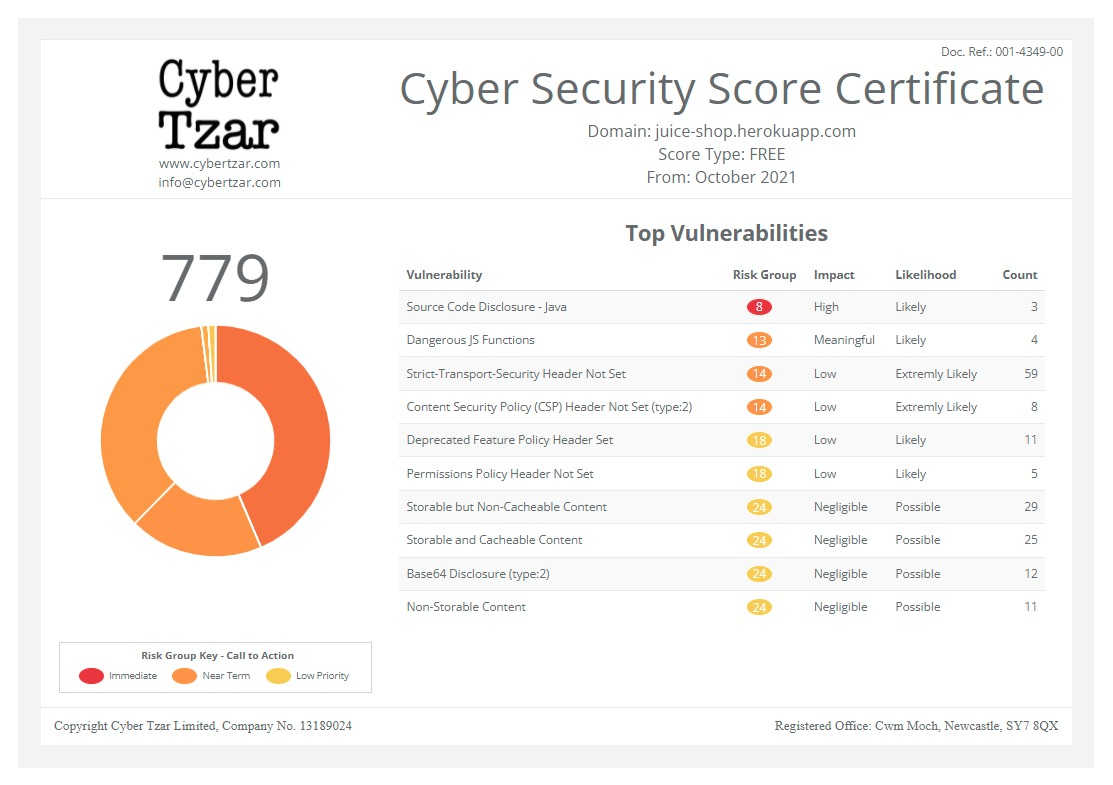
First slide label
Some representative placeholder content for the first slide.
Second slide label
Some representative placeholder content for the second slide.
Third slide label
Some representative placeholder content for the third slide.
MPs: UK falling behind on cyber-threats
published on 2026-11-19 08:22:39 UTC by Mark FletcherContent:
More than half of UK MPs believe the country is failing to keep pace with cyber-threats to critical national infrastructure, according to new research by cyber security and resilience specialist NCC Group.
The survey of 100 MPs found that 51% believe the UK is not keeping pace with cyber-threats, compared with 22% who believe it is.
Meanwhile, 47% consider the UK unprepared to defend against a major cyber-attack targeting critical infrastructure, and just 4% say the country is very prepared.
Recent cyber-attacks involving supermarket refrigeration systems in Europe are high profile examples of a growing series of incidents highlighting the live and evolving threat to critical infrastructure.
Vulnerabilities
Such attacks demonstrate how vulnerabilities in connected operational technology can have significant real-world consequences, disrupting operations, damaging supply chains and affecting the delivery of essential services.
Critical infrastructure includes the systems, networks and services whose disruption could seriously affect public safety, national security or economic stability, from energy and water to transport and healthcare.
Much of it is privately owned or operated, meaning responsibility for protecting it is shared between government, regulators and industry.
Regulation can set expectations, but operators must put requirements into practice while balancing security with cost, feasibility and the need to keep essential services running.
Legacy technology, unmapped systems and interconnected networks can make vulnerabilities difficult to address, while disruption in one part of a supply chain can have wider consequences.
Amplifying existing threats
The potential use of AI by attackers adds to these challenges, accelerating and amplifying existing threats as organisations work to secure complex environments.
While the findings reflect MPs’ perceptions rather than a technical assessment of the UK’s defences, they raise important questions about the country’s preparedness and how effectively government, regulators and industry communicate the risks.
The Cyber Security and Resilience Bill provides an opportunity to strengthen the UK’s approach, but its impact will depend on how effectively requirements translate into measurable improvements.
Significant implications
Louise Horton, Government Affairs Lead at NCC Group, said: “These findings indicate that MPs recognise the threat landscape is changing rapidly, driven by both technology and geopolitics, with significant implications for critical infrastructure.
“For critical infrastructure organisations, the challenge is being able to demonstrate their ability to respond to the evolving landscape before a cyber-attack even hits.
“Resilience is not just about organisational readiness and regulatory requirements. Organisations must build and maintain the confidence of political decision makers and the public in the delivery of essential services through disruption.
“Critical infrastructure leaders around the globe need to consider what partnership they require with government, politicians and regulators to shape the public’s view of national readiness for the evolving geopolitical landscape.”
https://securityjournaluk.com/mps-uk-falling-behind-on-cyber-threats/
Published: 2026 11 19 08:22:39
Received: 2026 11 19 08:31:50
Feed: Security Journal UK
Source: Security Journal UK
Category: Security
Topic: Security
Views: 9
