Cyber Security News Aggregator
.Cyber Tzar
provide acyber security risk management
platform; including automated penetration tests and risk assesments culminating in a "cyber risk score" out of 1,000, just like a credit score.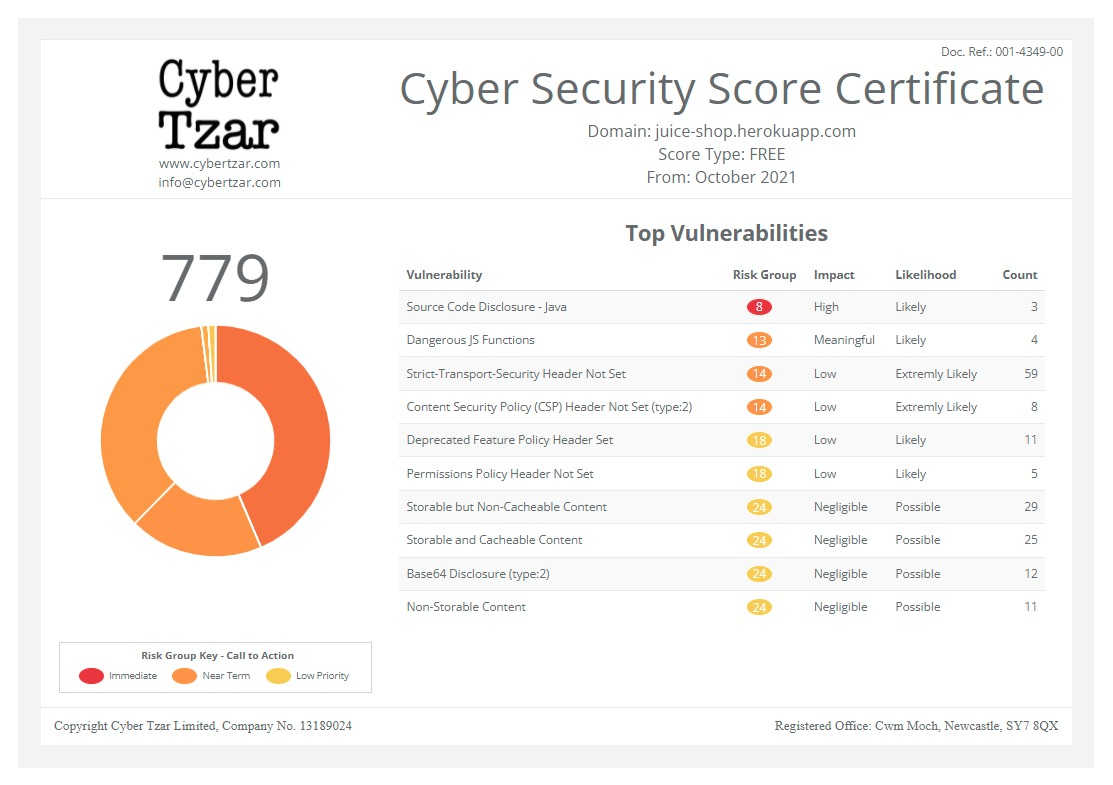
First slide label
Some representative placeholder content for the first slide.
Second slide label
Some representative placeholder content for the second slide.
Third slide label
Some representative placeholder content for the third slide.
DWP “Cyber incident” results in major service disruption
published on 2026-11-27 11:41:08 UTC by Mark FletcherContent:
The UK Department for Work and Pensions (DWP) has released a statement explaining that it had identified a “cyber incident affecting our systems”. As a result, in a precautionary move, some services have been taken offline, including its pension, universal credit and Pip services.
The instigators of the incident are still unknown.
Industry comments:
Javvad Malik, Lead CISO Advisor at KnowBe4, sad: “The DWP cyber incident creates an opportunity for scammers to exploit uncertainty.
“While benefit and pension payments are unaffected, people unable to log in may be more vulnerable to scam texts asking them to confirm bank details to avoid payment delays.
“Scammers are 5.4 times faster at reacting to headlines than in 2022, with generative AI helping them craft convincing messages. In just six months, the share of UK phishing attacks involving company impersonation rose from 10% to 17.3%.
“If you receive a text about a payment issue, don’t click the link. Go directly to GOV.UK and forward suspicious texts to 7726 for free. If you’ve shared your bank details and believe your account is at risk, contact your bank immediately.
“Organisations should plan for disruption by publishing updates that people can access without logging in, clearly explaining what’s still working and whether customers need to take action. This gives people a trusted place to verify suspicious messages.”
Clare Loveridge, Vice President and General Manager EMEA at Arctic Wolf, said: “With almost 25 million people relying on the Department for Work and Pensions for financial support, this incident shows just how vulnerable the systems underpinning everyday life can be.
“Even the precautionary measures taken by the DWP to contain the incident are already preventing people from submitting new benefit claims.
“Although regular benefit and pension payments are unaffected, people who rely on these services need to be wary. Cybercriminals will likely use the incident as a tool for social engineering.
“With disruption to DWP services already making headlines, fraudulent messages asking people to reconfirm their bank details to avoid delays on their next payment could be incredibly convincing.
“Anyone receiving such messages should avoid clicking on links or calling numbers provided in the message, instead contacting the DWP directly using the details listed on GOV.UK.”
Andy Ward SVP International at Absolute Security, said: “We are seeing a concerning pattern of cyberattacks that go beyond financial gain, with criminals targeting the services which people rely on daily.
“Prolonged downtime of these services may have serious consequences to users and unfortunately, this incident is just another reminder of the growing cyber threats businesses are facing today.
“It is only a matter of time before another organisation finds itself in the same position.”
“These attacks should serve as a warning for businesses to bolster their cyber defences, which starts with knowing which devices and supplier systems can reach their networks.
“Over half of CISOs reported facing a cyber breach over the past year, according to our research, with recovery costing an average of $2.5m per incident. Having the ability to recover from cyber attacks quickly and reduce downtime is vital.”
Graeme Stewart, head of public sector at Check Point, said:
“This is the new normal: public services have to prepare for disruption from cyberattacks, but also from human error, faulty updates and supplier failures.
“The impact on the public can be much the same, even when the cause is different. We don’t yet know what happened at DWP, so it would be wrong to call this a data breach.
“There’s also a legacy problem across the public sector. Older systems can be harder to patch, monitor and recover. DWP has acknowledged it relies on very old technology. That doesn’t prove it caused this incident, but it strengthens the case for sustained investment in systems that can be supported and secured.
“Then there’s the digital monoculture. Public services increasingly rely on the same small group of technology providers. It’s like planting the whole field with one crop: a faulty update or supplier failure can spread disruption across organisations that have little else in common.
“Taking a service offline can be sensible containment, like closing a fire door while you find the source of the smoke. But it’s triage, not resilience. Investment must also go into limiting how far failures can spread, recovering quickly and keeping essential services running. One fault shouldn’t be able to take the whole service down with it.”
Jamie Akhtar, CEO and Co-founder of CyberSmart, said: “The cyber incident affecting the Department for Work and Pensions (DWP) is extremely concerning, particularly given the millions of vulnerable people who rely on its services.
“The department has been forced to take several online systems offline as a precaution, with claimants reportedly unable to access Universal Credit accounts and other services, including pension and disability benefit applications.
“While the DWP has confirmed that regular benefit and pension payments remain unaffected, the disruption highlights just how serious the consequences of a cyberattack on essential government infrastructure can be. The department also holds vast amounts of sensitive personal and financial information, making it a particularly concerning target.
“Although there is currently no confirmation that any data has been compromised, the incident demonstrates that cybersecurity is about much more than protecting information. It’s also about ensuring critical services remain accessible to the people who depend on them.
“For organisations responsible for essential services, this reinforces the importance of having robust cybersecurity measures and business continuity plans in place. Strong access controls, multi-factor authentication, regular software updates and continuous monitoring are all essential for reducing the risk of attacks.
“However, businesses and public sector organisations must also be prepared for the possibility that systems could become unavailable, ensuring they have alternative ways to maintain services and support customers.
“DWP claimants should also remain vigilant against phishing emails or text messages attempting to exploit the disruption, particularly those requesting bank details or encouraging them to click suspicious links.
“Ultimately, this incident is a reminder that no organisation is immune to cyber threats, and protecting the continuity of essential services must be treated as a fundamental cybersecurity priority.”
https://securityjournaluk.com/dwp-cyber-incident-major-disruption/
Published: 2026 11 27 11:41:08
Received: 2026 11 27 20:10:57
Feed: Security Journal UK
Source: Security Journal UK
Category: Security
Topic: Security
Views: 1
