Cyber Security News Aggregator
.Cyber Tzar
provide acyber security risk management
platform; including automated penetration tests and risk assesments culminating in a "cyber risk score" out of 1,000, just like a credit score.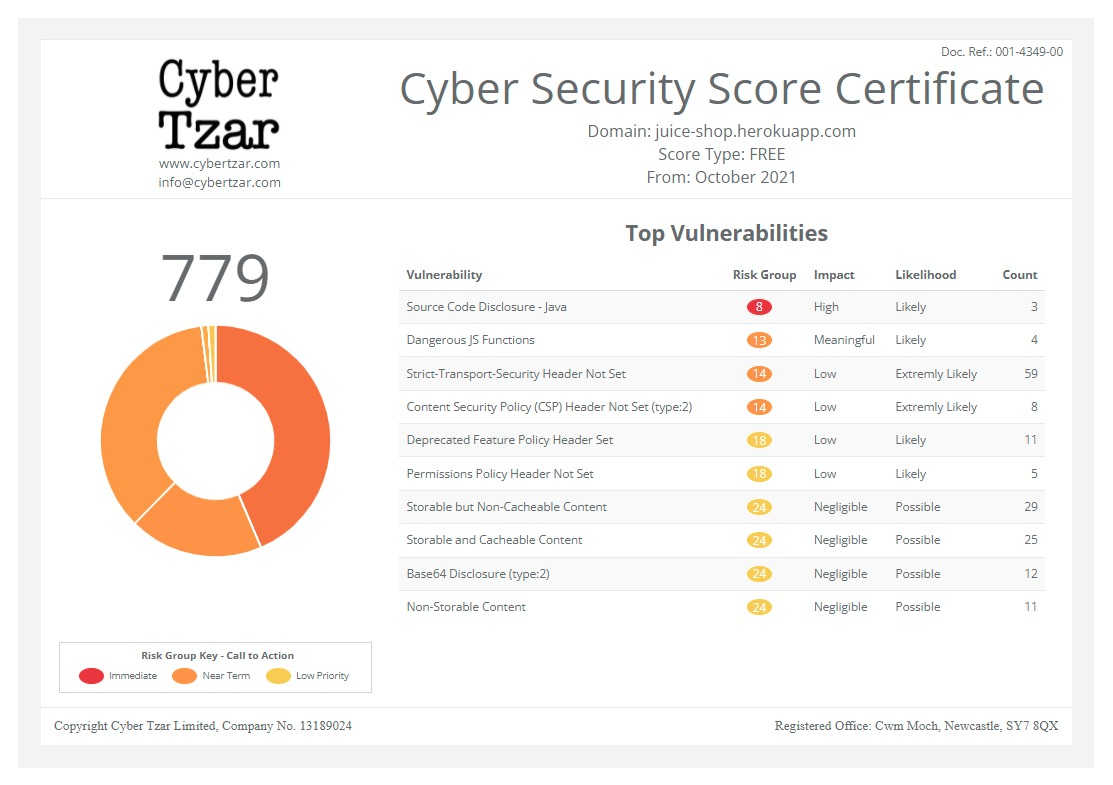
First slide label
Some representative placeholder content for the first slide.
Second slide label
Some representative placeholder content for the second slide.
Third slide label
Some representative placeholder content for the third slide.
As threats heighten, access intelligence is a must
published on 2026-11-27 07:30:00 UTC by Mark FletcherContent:
Chris Burton, Executive Vice President of Strategy at Sign In App, explains why new UK security requirements make the ‘other AI’ essential for properties with high-footfall traffic.
When Darren Mountain joined the just-opened Newman Hotel in London as chief engineer, it didn’t take long for him to recognise the property’s sign-in process needed a serious upgrade.
As fine-tuned as the hotel is in almost every respect (The Times named it the U.K.’s best new hotel in 2026), it was relying on old-fashioned paper forms and manual processes to sign-in contractors, staff, visitors and delivery drivers at its loading bay entrance, creating unnecessary friction and risk.
Knowing these manual processes weren’t suitable or sustainable for the hotel, nor for additional properties in the operator’s portfolio, Mountain quickly engineered a shift to a digital system that would provide the heightened security, compliance and auditability that properties like the Newman Hotel must have to protect its physical facilities and the people occupying them, and to meet the requirements of measures like Martyn’s Law.
With policies like Martyn’s Law, the message from U.K. policymakers to building operators and a variety of other organisations is clear: Do more to protect people as well as your physical and digital infrastructure from bad actors or risk paying big fines for non-compliance.
If your organisation hosts sizable gatherings in the U.K., its responsibilities under Martyn’s Law are likely to grow in the months and years ahead. And failure to fulfil those responsibilities could be costly.
Martyn’s Law, which requires academic institutions, public venues and other qualifying premises to put in place procedures for evacuation, invacuation, locking down premises and onsite communications during an incident, threatens fines of up to £18 million or 5% of an organisation’s worldwide revenue for noncompliance. Its requirements take hold in Spring 2027.
Ultimately, an organisation’s ability to comply with policies like this will come down to one key attribute: access intelligence.
Strengthen security, compliance and emergency response
Commercial properties attract a broad range of visitors who all seek one thing: access to physical facilities, IT infrastructure, intellectual property or employees. E
ach visitor presents a unique risk that an organisation must manage based on their profile and their reason for wanting access.
Access intelligence is having the real-time insights at hand to know at any given time exactly who is on-site, seeking access to, or engaged with your physical facilities, digital infrastructure and employees, why and for how long.
It enables building operators to create a proactive security posture with a structured approach that encompasses processes, practices, systems and capabilities.
How do you know an organisation has a high level of access intelligence? For one, it’s ready, willing and able to fulfil its duty to protect the people within its venues, along with its most valuable physical and digital assets, from bad actors. But there’s more to it than security and compliance.
Because they have a complete picture of who’s interacting with them and why, building operators can use that insight to consistently provide rich, personalised experiences to visitors.
These positive experiences help differentiate an organisation in the eyes of visitors and cultivate an organisational brand that values people and security hand-in-hand.
Regardless of the kind of work your organisation does, or the types of visitors with which it interacts, there’s one element it must have in order to operate with access intelligence.
That element? A single, integrated environment for governance, risk and compliance (GRC), one in which intelligent access controls, policies, procedures, risk workflows, reporting functions and data all reside and interact in one place instead of being scattered across manual visitor logs, spreadsheets and disparate security and compliance systems, practices and processes.
Achieving a higher standard
That centralised environment becomes the organisational “brain” where access intelligence resides and a hub for managing all the responsibilities and requirements that come with Martyn’s Law and other policies.
Here’s what that looks like in practice:
• Flexibility and scalability. Organisations can tailor policies to specific properties, zones and individual risk profiles, whether they operate one property or 100.
• Minding the gaps. By connecting the physical and cyber domains in one environment, organisations can address vulnerabilities in each, closing gaps that may arise when weak measures in one domain invite additional risk in the other domain – subpar network security that enables a bad actor to disable physical security systems, for example.
• GRC simplified. Having that single environment makes it easy for organisations to access information to confirm compliance with regulations and to prepare for potential audits.
• A streamlined front-door (or loading dock) experience with simplified processes that staff and visitors are more likely to follow. Easy-to-follow, quick and consistent processes make for better visitor experiences and stronger access control. Every entry is documented and every step is traceable.
• A converged 360° view of each visitor. Knowing the digital and physical identities of people entering their properties and/or accessing their digital infrastructure is a vital part of access intelligence. It’s also an important compliance step for organisations that will be subject to the U.K.’s recently published digital verification services trust framework.
• Visitors feel expected, not inspected. By gathering enough information about a visitor and their upcoming visit, organisations gain a fuller picture of the people they’re expecting. They then can streamline and personalise visitor experiences accordingly.
• Accounting for the entire visitor lifecycle, not just a moment at the point of entry. It’s not enough to treat the physical point of entry as the trigger for security and compliance measures. Access intelligence entails the use of pre-screening and other measures earlier, at the true initial point of engagement with a potential visitor, such as an email invitation to an onsite meeting. And it means tying up loose ends, like ensuring a visitor’s guest Wi-Fi credentials expire automatically when their visit concludes.
• Ready to respond. Having access to live visitor lists, emergency notifications and communications and fast real-time headcounts makes for more rapid and effective responses to an emergency.
As threats heighten and rules tighten, the onus is on organisations across the U.K. to prevent and protect people, places and cyber spaces. Access intelligence is the superpower that enables them to excel in that role.

Based in the U.K, Chris Burton is executive vice president of strategy at Sign In App, a company that provides access intelligence solutions to a wide variety of customers in more than 100 countries. A long-time innovator in the visitor management space, Chris focuses on shaping seamless, secure and compliant visitor experiences for companies in a range of industries. He co-founded Sign In App Smart Visitor Management and All Things Code Ltd.
https://securityjournaluk.com/as-threats-heighten-access-intel-is-a-must/
Published: 2026 11 27 07:30:00
Received: 2026 11 27 20:10:57
Feed: Security Journal UK
Source: Security Journal UK
Category: Security
Topic: Security
Views: 3
