Cyber Security News Aggregator
.Cyber Tzar
provide acyber security risk management
platform; including automated penetration tests and risk assesments culminating in a "cyber risk score" out of 1,000, just like a credit score.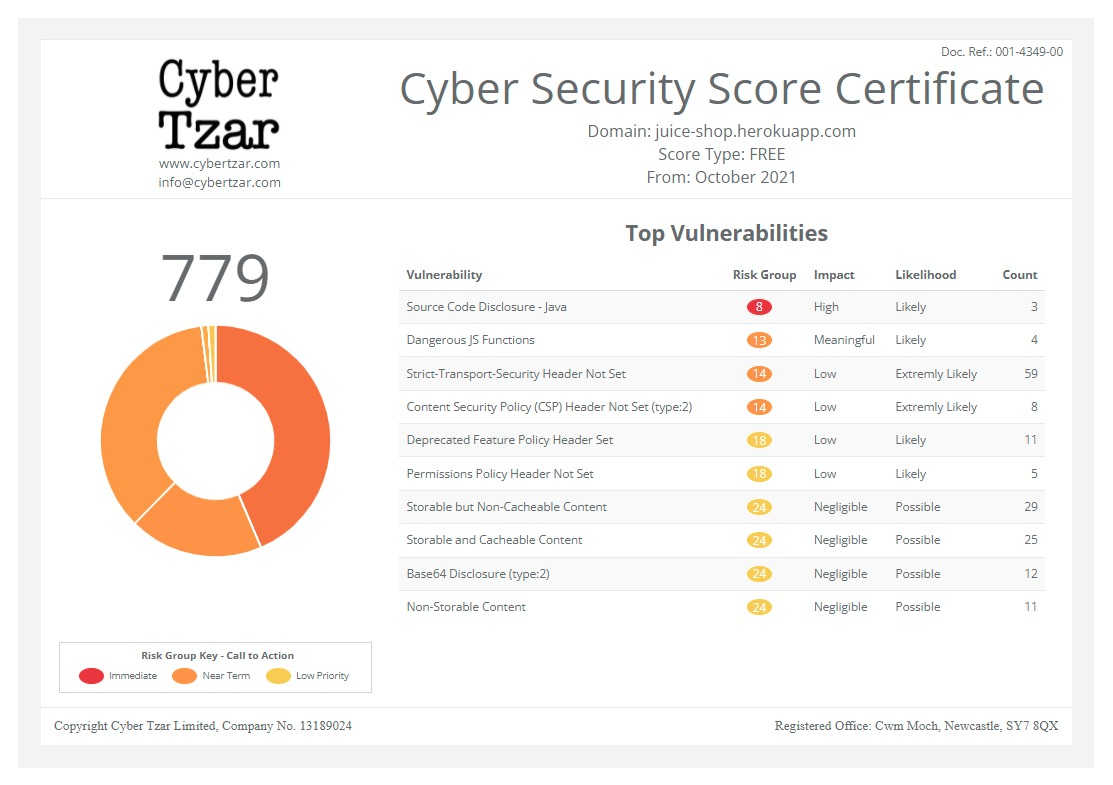
First slide label
Some representative placeholder content for the first slide.
Second slide label
Some representative placeholder content for the second slide.
Third slide label
Some representative placeholder content for the third slide.
Retailers working with the police is common sense
published on 2026-11-26 10:44:37 UTC by Mark FletcherContent:
Nick Fisher, CEO, Facewatch, explains that as a former retailer he finds it difficult to reconcile some of the comments being made by campaign groups with the reality of what is happening on our high streets and in our shopping centres every day.
The latest suggestion from Big Brother Watch is that technology helping retailers gather evidence of crime and share it with the police is enabling a form of ‘cowboy policing’.
Facewatch may be the intended target of these comments, but they do a disservice to an entire industry that has spent years taking responsibility, investing in crime prevention and working hard to better protect its people.
There is nothing new, sinister or controversial about a retailer sharing CCTV images of a suspected crime with the police. Nor should there be anything controversial about retailers working together, within the law, to identify patterns of offending and help the police build cases against those responsible.
What has changed is our ability to do this more effectively.
For years, one of the biggest frustrations among retailers has been the experience of reporting individual crimes to the police and seeing little or no meaningful outcome. It has been equally frustrating for police officers, who have finite resources and difficult decisions to make about where to deploy them.
A report of £50 worth of goods being stolen from a shop tells the police relatively little. Evidence that the same individual is suspected of committing dozens of offences, across multiple locations, potentially involving violence or intimidation, presents a very different picture.
The police need actionable intelligence and using technology to surface and reveal the connections between incidents helps provide it.
We should celebrate the considerable amount of work that has gone into achieving this, much of it driven and funded by the retail industry itself.
Business Crime Reduction Partnerships have been operating in towns and cities across the UK for decades, bringing together retailers, police, local authorities and other businesses.
Sharing information, including images where appropriate, identifying prolific offenders and coordinating crime prevention activity are established elements of their work.
Capture evidence, identify trends and report crime
There is also a mature market for crime management and reporting technology, with businesses investing in systems that enable them to capture evidence, identify trends and report crime more effectively.
At a national level, a number of initiatives have brought retailers, policing and industry bodies closer together, improving the sharing of intelligence and enabling a more coordinated response to prolific and organised retail crime.
Earlier this month, four important campaigns came together for the first time: the National Business Crime Centre’s Safer Business Action Week, the Retail Trust’s Let’s Respect Retail campaign, the Association of Convenience Stores’ ShopKind initiative and Usdaw’s Respect for Shopworkers Week.
Each approaches the problem from a slightly different perspective, but all share a common purpose – making retail a safer place to work.
Alongside this, the Government has announced a new pilot programme to target prolific retail offenders across up to 16 police force areas. It is another welcome recognition that tackling persistent offending requires a more coordinated approach.
None of this has happened by accident. It is the result of years of campaigning, investment, partnership working and, frankly, a great deal of persistence by people who refuse to accept that crime and violence should be part of the working day for shop staff.
So where does Facewatch Live fit into all of this?
Our new crime management and reporting platform, currently in beta testing, is designed to help retailers improve the quality of the evidence and intelligence they can provide to the police. It enables them to record incidents, gather supporting evidence, identify potential links between offences and build more comprehensive case files.
The retailer remains in control of its incident records and decides what information is shared and with whom. Facewatch acts as its data processor, not as a police force. Authorised retailer personnel must review and confirm any suggested links between incidents.
It is not about determining guilt, dispensing justice or circumventing due process. Those responsibilities quite rightly sit with the police and the criminal justice system.
Of course, there must be proper safeguards around the use of personal data. Technology providers, retailers and police forces must all be accountable for how they handle and share information. We welcome scrutiny and have consistently called for greater regulatory clarity around the use of live facial recognition in the private sector.
But we should not confuse legitimate scrutiny of technology with a case against its legitimate use.
The retail industry is not asking for special police powers. It is asking for better ways to prevent crime, protect its employees and help the police bring offenders to justice.
Behind every crime report is a human story that too often goes untold. It might be a young shop worker experiencing their first threatening encounter, a store manager who has been repeatedly intimidated, or a colleague whose family worries every time they leave for work.
These people have every right to expect their employers to do everything reasonably possible to keep them safe.
After years of working to bring retailers and the police closer together, the last thing we should be doing is driving a wedge between them.
We should be building on that progress, not talking it down.

Nick Fisher is CEO of Facewatch and an experienced business leader with an extensive background in the retail sector. He was previously Chief Operating Officer of Phones 4u, where he was responsible for a nationwide network of 700 stores generating more than £1 billion in annual revenue.
https://securityjournaluk.com/working-with-the-police-common-sense/
Published: 2026 11 26 10:44:37
Received: 2026 11 27 20:10:59
Feed: Security Journal UK
Source: Security Journal UK
Category: Security
Topic: Security
Views: 1
